
Every few years a new living room look takes over the internet, and every few years it quietly disappears. Remember the all-grey room, the neon accent wall, the wall of matching farmhouse signs? Each one looked current for a season and dated soon after, and each one cost real money to install and then to undo. A timeless living room avoids that cycle entirely. It is not a style you buy in one shopping trip; it is a set of calm, well-proportioned choices that still look right when the trends move on.
Quick answer: A timeless living room on a budget starts with warm neutrals, one comfortable sofa in a classic shape, natural wood, and simple window treatments. Spend on the pieces you touch daily — seating, lighting, and a rug that fits — and save on art, cushions, and accessories, which are easy to change later.
What Actually Makes a Room Timeless?
Timeless rooms share three qualities, and none of them depends on spending a lot. First, the proportions are generous: furniture fits the room instead of crowding it, and walkways stay at least 30 inches wide. Second, the palette is restrained, usually three colours at most, with one warm neutral doing most of the work. Third, the materials look like themselves — wood reads as wood, linen reads as linen — rather than imitating something more expensive. When a room has those three qualities, you can change a cushion colour in five years and the whole room still works.
Trendy rooms fail in the opposite way. They lean on one loud feature — a patterned wallpaper, a sculptural chair, a very specific shade — and when that feature dates, the whole room dates with it. The fix is not to avoid personality. It is to put personality in the cheap, changeable layers and keep the expensive, hard-to-change layers calm.
The 10-Year Test: A Decision Guide for Every Purchase
Before buying anything over $50 for the room, run it through a simple test: can you picture it in this room in ten years, in a different house, with different cushions? A straight-armed sofa in oatmeal linen passes. A curved velvet sofa in emerald green might pass for a confident decorator, but for most budgets it is a risk. A solid oak coffee table passes. A high-gloss acrylic table with gold legs probably does not.
The test also works in reverse. Some cheap items pass easily because they are simple: plain white ceramic vases, a natural jute rug, unlined linen curtains in ivory. Price and longevity are not the same thing. A $40 jute rug that lasts eight years is a better timeless buy than a $300 patterned rug that looks tired after two. Ask how the piece ages, not just how it photographs on day one.
Colours That Do Not Date
Warm white, soft greige, warm grey, and muted sage are the safest wall colours for a timeless room, because they flatter wood tones and skin tones at the same time. Pure brilliant white can feel cold in a north-facing room, and a very dark accent wall locks you into one mood. If you love colour, bring it in through cushions, throws, and art, where a $25 change refreshes the room instead of a $200 repaint.
One practical rule helps: keep the three largest surfaces — walls, sofa, and rug — in the same warm or cool family. A warm cream wall, a beige sofa, and a natural jute rug will always get along. Mixing a cool grey wall with a warm camel sofa and a cold white rug is where rooms start to feel unsettled, even when each piece is attractive on its own. For help sizing that rug, our living room rug size guide gives exact measurements for every common layout.
Where Should You Spend First?
Spend first on comfort and light. A sofa you sit on every evening is worth more than a beautiful chair nobody uses. Aim for a seat depth of 21 to 24 inches and a seat height of 17 to 19 inches, which suits most adults, and check that the frame is hardwood or a sturdy engineered frame rather than soft pine that wobbles within a year. If a new sofa is out of reach, a well-fitted slipcover at $80 to $150 can turn a dated sofa into a neutral one for a fraction of replacement cost.
Lighting comes next. Two or three lamps at different heights — a floor lamp beside the sofa, a table lamp on a side table, and the ceiling light on a dimmer — make a room feel finished in a way that one bright overhead fixture never does. Warm white bulbs at 2700K keep the palette soft in the evening. A minimalist approach pairs well here: our minimalist living room guide shows how fewer, better pieces can make a small room feel calmer without feeling empty.
The Worked $430 Refresh
Here is a realistic refresh for a typical 12 by 15 foot living room, assuming the sofa and main furniture stay. The point is not the exact total; it is the order, cheapest high-impact change first.
| Change | What to buy | Typical cost |
|---|---|---|
| Paint one accent wall, or touch up scuffs | One gallon warm white or greige paint + roller | $45–$55 |
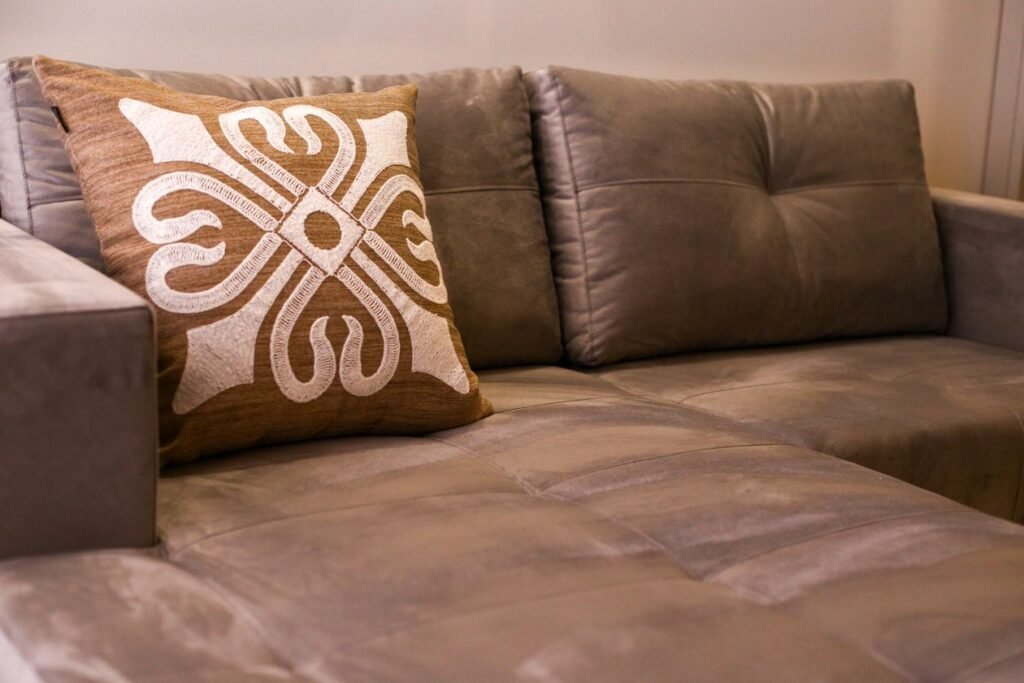
| Soften the sofa | Washable slipcover or two linen-look cushion covers | $80–$120 |
| Ground the seating area | 8 by 10 foot jute or flat-weave rug | $90–$130 |
| Fix the lighting | One floor lamp + warm white bulbs | $60–$80 |
| Frame what you own | Three simple wood frames for prints or photos | $35–$45 |
| Total | $310–$430 |
Notice what is missing: no new sofa, no new coffee table, no statement chair. Those are the purchases to save for and choose slowly, using the 10-year test, while the $310 to $430 layer above makes the room liveable and calm right now. If the budget is tighter, start with paint and lighting alone — about $105 to $135 — and add the rug next month.
Small Choices That Quietly Date a Room
A few habits age a room faster than any single purchase. Matching sets — sofa, loveseat, and chair all in the same fabric — read as a showroom rather than a home, and they make the room harder to update piece by piece. Overly themed accessories, such as a full set of matching word signs, date quickly because the theme is the whole decoration. And very small rugs, the classic 5 by 7 foot rug floating in the middle of a seating group, make even good furniture look temporary; front legs of the sofa and chairs should sit on the rug, which usually means an 8 by 10 foot rug for a standard three-seat sofa.
None of this requires a designer. It requires pausing before the trend purchase and asking whether the item earns its place for a decade. Timeless decorating is mostly restraint: fewer colours, simpler shapes, natural materials, and one or two personal pieces that actually mean something to the people who live there.
Frequently Asked Questions
What is the cheapest way to make a living room look timeless?
Start with paint and lighting. A gallon of warm white paint costs about $45 to $55, and swapping cool bulbs for warm white 2700K bulbs costs a few dollars per bulb. Together they soften the whole room before you buy any furniture at all.
Are grey sofas timeless or dated?
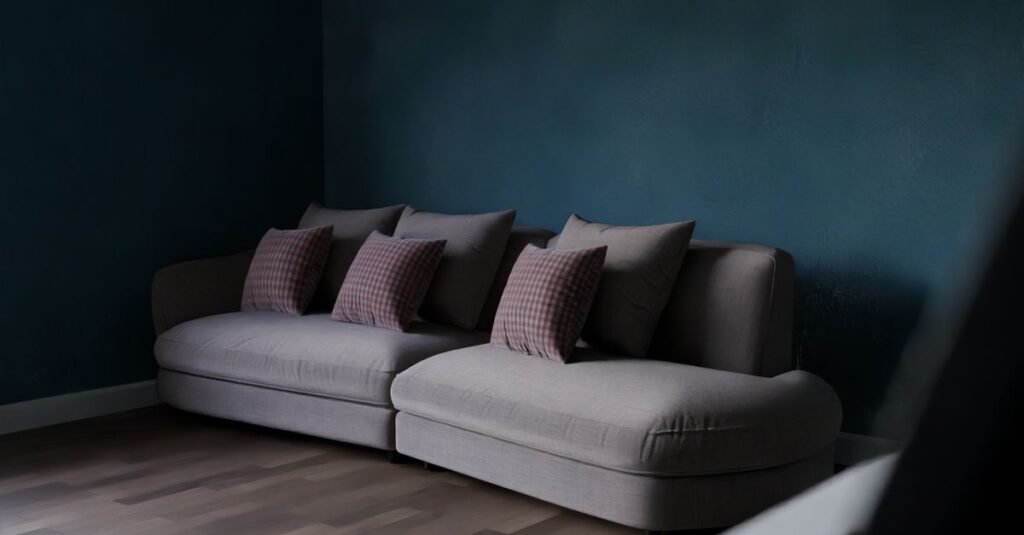
A warm grey sofa in a simple shape is still a safe, long-lasting choice. Cool, blue-grey sofas paired with all-grey rooms feel more dated now, because the whole grey-on-grey look was a specific trend. Warm neutrals — beige, oatmeal, warm greige — age more gracefully.
How many colours should a timeless living room have?
Three at most: one main neutral for walls and large furniture, one secondary neutral or wood tone, and one accent colour used sparingly in cushions, throws, and art. More than three colours usually needs a designer’s eye to hold together.
Can a timeless room still feel personal?
Yes, and it should. Personality belongs in art, books, plants, and objects with a story, not in the sofa shape or wall colour. Those personal layers are also the cheapest to change, so the room can evolve without a full redecoration.
Is it worth buying a quality sofa on a tight budget?
If you can, yes — seating is the hardest-working item in the room. If you cannot, buy a simple, well-built secondhand frame or use a slipcover on what you own, and save the statement purchase until the budget allows a piece that passes the 10-year test.
A timeless living room is not a room without character. It is a room whose character comes from proportion, natural materials, and personal details rather than from this year’s trend. Spend slowly on the big pieces, keep the palette calm, and let the cheap layers carry the colour — and the room will still look right long after the trend cycle has moved on.