

Walk into a living room that feels instantly welcoming and you will usually find the same secret at work: not an expensive sofa or a bold wall colour, but layers of texture. A smooth leather chair next to a nubby wool throw, a rough jute rug under a soft linen cushion, matte plaster beside polished wood — these contrasts are what make a room feel finished rather than flat. Without them, even a well-furnished room can look like a showroom display: correct, but cold.
The good news is that texture is one of the cheapest upgrades in decorating. Most of it lives in the soft, changeable layers — throws, cushions, rugs, curtains — so you can transform a room for a few hundred dollars and change it again next season without touching the furniture. The trick is layering with a plan instead of piling on random soft furnishings until the room looks cluttered.
The 5-Layer Texture Framework
Think of texture in five layers, working from the largest surface to the smallest detail. A room feels balanced when at least three of the five are present, and it feels rich when all five show up in some form. The table below is a quick reference you can use while shopping or rearranging what you already own.
| Layer | Where it lives | Examples | Typical cost |
|---|---|---|---|
| 1. Ground | Floor | Jute, wool, or flat-weave rug | $90–$140 |
| 2. Soft seating | Sofa and chairs | Linen, cotton, velvet, bouclé | $0–$120 (covers or cushions) |
| 3. Warmth | Sofa arms and beds of chairs | Chunky knit, waffle weave, faux fur throw | $25–$45 |
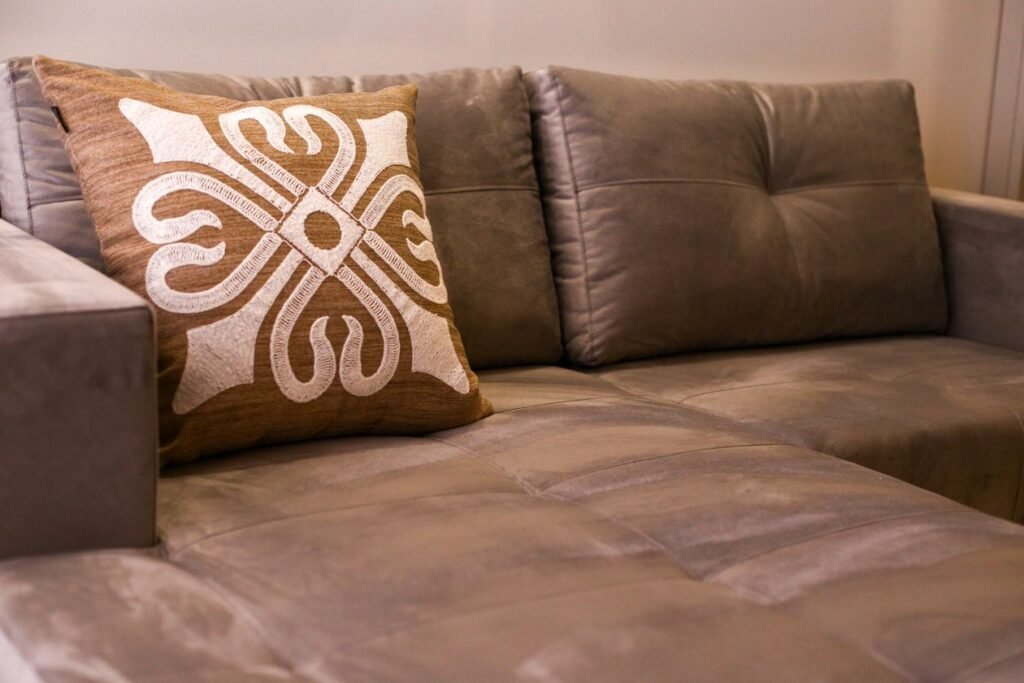
| 4. Touch points | Cushions and small textiles | Velvet, raw cotton, embroidered linen | $15–$30 each |
| 5. Hard contrast | Tables and decor | Wood grain, rattan, ceramic, metal, stone | $20–$60 |
Notice that the framework is about contrast, not quantity. A room with a smooth leather sofa, a shiny metal lamp, and a glass coffee table has almost no texture contrast at all — everything is sleek — which is why such rooms can feel cold despite good furniture. Add one rough element, such as a woven basket or a chunky throw, and the whole room softens. Conversely, a room where everything is soft and fuzzy — shag rug, velvet sofa, faux fur everything — feels heavy and dusty. One hard, smooth surface, like a wooden tray on the sofa or a ceramic vase on the coffee table, gives the eye somewhere to rest.
How Much Texture Is Too Much?
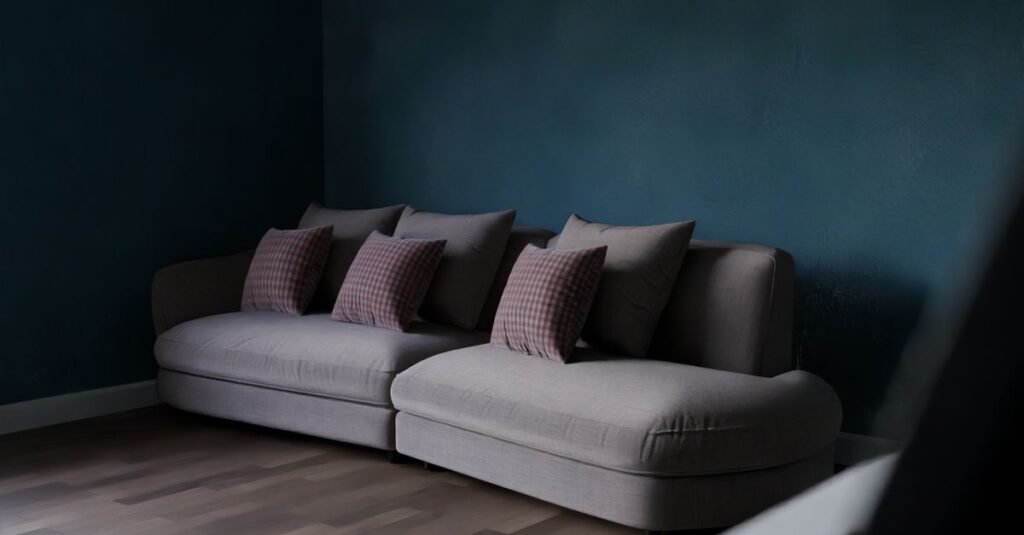
A useful rule is three textures per seating area, plus one accent. On a standard three-seat sofa, that might mean a linen sofa fabric, a knit throw, and two cushion fabrics — say velvet and raw cotton — with a woven basket nearby as the accent. That is plenty. When every cushion is a different fabric, the throw competes with a patterned rug, and the curtains add yet another weave, the eye has nowhere to settle and the room reads as busy rather than cosy.
Colour discipline helps here. Keep the textures in the same palette family — warm creams, beiges, and one muted accent such as sage or terracotta — and the variety of surfaces will read as richness, not chaos. If the palette is already varied, keep the textures simpler, and vice versa. One of the two should always be doing the quiet work.
Does texture work in a small living room?
Yes, and it matters more there, because small rooms cannot rely on large furniture or bold architecture for interest. Choose lighter-weight textures — linen, cotton, and flat-weave rugs rather than heavy velvet and deep shag — so the layers add warmth without visual weight. A single chunky throw and two contrasting cushions can be enough.
Can I mix warm and cool textures?
Texture itself is neither warm nor cool, but materials lean one way: wool, wood, and rattan feel warm, while glass, metal, and smooth stone feel cool. A comfortable room usually mixes both, with warm textures in the majority. If a room feels cold, add warm materials first; if it feels heavy, add a cool, smooth surface.
Do I need to replace my sofa to add texture?
No. A sofa’s texture can be changed with a washable slipcover ($80–$150), a throw draped over one arm, and two new cushion covers. Those three changes cost far less than a new sofa and can be reversed in an afternoon if the combination does not work.
Texture by Surface: Sofa, Rug, Walls and Windows
Start with the rug, because it anchors everything else. In a standard seating arrangement, an 8 by 10 foot rug suits a three-seat sofa, with the front legs of the sofa and chairs sitting on it. A flat-weave or low-pile rug works best in high-traffic rooms and under coffee tables, while a deeper pile suits a reading corner that sees less foot traffic. For exact rug sizing by layout, our living room rug size guide gives measurements for every common arrangement.
Next, the sofa. If the sofa fabric is smooth, add a textured throw and at least one cushion in a contrasting weave. If the sofa is already heavily textured, such as bouclé, keep the throw simple and smooth so the two do not compete. Curtains are the most overlooked texture layer: unlined linen panels soften a window far more than a bare blind, and they cost $30–$60 a pair ready-made. Finally, walls contribute texture too — a woven wall hanging, a rattan mirror frame, or a row of wooden floating shelves breaks up flat painted surfaces without any renovation.
A Worked $260 Texture Refresh
Here is a realistic plan for a typical 12 by 15 foot living room, assuming the sofa, rug, and curtains stay. The aim is contrast in every layer for the lowest sensible spend, using the framework above.
| Buy | What to choose | Typical cost |
|---|---|---|
| Chunky knit throw | One throw in cream or oatmeal, draped over a sofa arm | $30–$45 |
| Cushion covers (4) | Two velvet, two raw cotton or linen-look, in the room’s palette | $40–$60 |
| Woven basket | One large seagrass basket for throws or magazines | $25–$40 |
| Linen-look curtain panels | One pair, hung high and wide to soften the window wall | $35–$55 |
| Wooden tray + ceramic vase | Hard contrast for the coffee table | $25–$40 |
| Small rug layer (optional) | A 2 by 3 foot sheepskin-style mat over the main rug by a chair | $20–$30 |
| Total | $175–$270 |
The order matters: throw and cushions first, because they change the seating area you actually use; basket and tray next, because they add hard contrast cheaply; curtains last, because they are the most visible single change and are worth choosing once the sofa palette is settled. If the budget is tighter, skip the layered rug and the tray, and the refresh drops to about $130–$200 with most of the effect intact. A calm palette makes all of this easier: our timeless living room guide explains how warm neutrals let texture, rather than colour, carry the room.
Seasonal Texture Swaps That Cost Almost Nothing
Texture is also the easiest way to change a room with the seasons. In summer, swap a chunky knit throw for a lightweight cotton one, replace velvet cushions with linen, and remove the layered rug mat. In winter, reverse the swap and add a faux fur cushion or two. Stored in the same woven basket, the off-season textiles stay tidy and the room feels intentionally changed rather than randomly redecorated. Two sets of cushion covers — one light, one heavy — cost about $40–$60 in total and effectively give the room two looks a year.
Texture layering is not about buying more things. It is about making sure the things already in the room are not all doing the same job. Check the five layers, add contrast where one is missing, keep the palette calm, and stop at three textures per seating area plus one accent. The room will feel warmer, more finished, and more personal — without a single piece of new furniture.

One Comment