
Shopping for light bulbs used to be simple: you bought a 60-watt bulb and you knew what you were getting. LED bulbs changed that, because watts now measure energy use, not brightness. A 9-watt LED and a 60-watt incandescent can put out roughly the same light, which is why bulb boxes now lead with lumens, the actual measure of brightness. The trouble is that nobody hands you a lumen target when you walk into a room, so most people either buy too dim and live in gloom, or buy too bright and end up with a kitchen that feels like an office.
Quick answer: Multiply the room’s square footage by the lumens per square foot for that room type: living rooms and bedrooms need 10–20 lumens per square foot, kitchens and home offices need 30–50, and bathrooms need 20–30. A 180-square-foot living room therefore needs about 1,800–3,600 lumens in total, spread across several lamps and fixtures rather than one harsh overhead light.
Lumens, Watts and Square Feet: The Formula That Actually Works
Start with the room’s area. Measure length times width in feet: a 12 by 15 foot living room is 180 square feet. Then multiply by the per-square-foot range for how the room is used. Rooms where you relax need less light; rooms where you chop, read fine print or apply makeup need more. This is a target for total light in the room, not a single bulb, and that distinction matters more than the exact number.
For bulb shopping, it helps to know the common LED equivalents. Roughly: 450 lumens replaces a 40-watt bulb, 800 lumens replaces a 60-watt bulb, 1,100 lumens replaces a 75-watt bulb, and 1,600 lumens replaces a 100-watt bulb. The box will state the lumens, so check that number rather than the wattage-equivalent claim, which manufacturers round generously.
How Many Lumens Per Room? The Chart
| Room | Lumens per sq ft | Typical room | Total lumens |
|---|---|---|---|
| Living room | 10–20 | 200 sq ft | 2,000–4,000 |
| Bedroom | 10–20 | 150 sq ft | 1,500–3,000 |
| Kitchen | 30–40 | 120 sq ft | 3,600–4,800 |
| Bathroom | 20–30 | 50 sq ft | 1,000–1,500 |
| Dining room | 10–20 | 150 sq ft | 1,500–3,000 |
| Home office | 30–50 | 100 sq ft | 3,000–5,000 |
| Hallway | 5–10 | 60 sq ft | 300–600 |
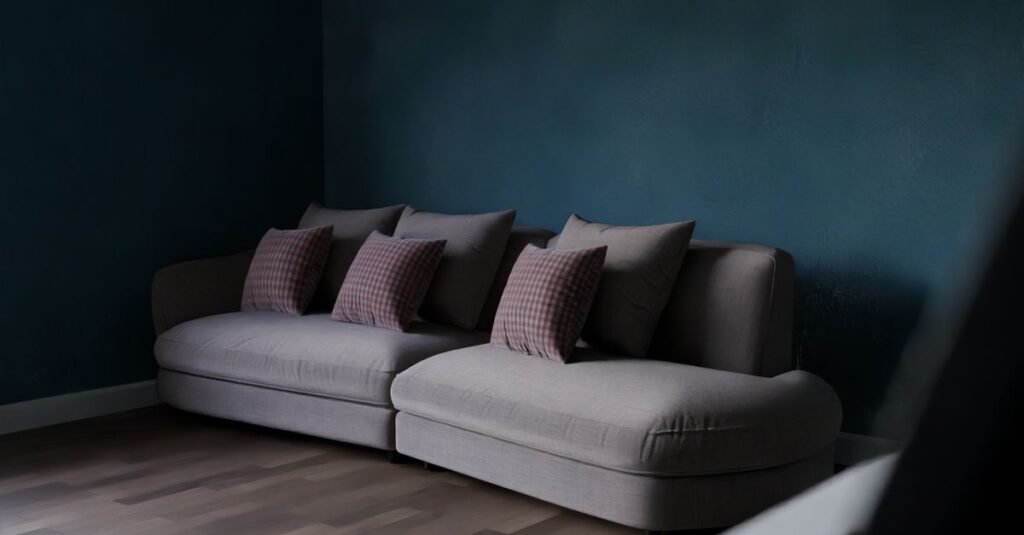
Use the low end of a range for rooms with pale walls and plenty of daylight, and the high end for dark walls, north-facing rooms or rooms with one small window. Dark paint absorbs light, so a navy bedroom genuinely needs more lumens than an identical white one. If you are choosing a dining fixture to go with these numbers, our dining room lighting guide covers chandelier size and hang height in detail.
How to Count Bulbs in a Real Room
Take that 12 by 15 foot living room: 180 square feet, and 15 lumens per square foot as a middle target gives 2,700 lumens. One 2,700-lumen ceiling fixture would hit the number and still feel awful, because all the light comes from one point and throws hard shadows. Split it instead across three layers: a ceiling fixture at about 1,600 lumens, a floor lamp at 800 lumens beside the sofa, and a table lamp at 300 lumens for reading. That adds up to 2,700 lumens, but the light comes from three directions, so the room feels evenly lit rather than spotlighted.
Apply the same layering in the kitchen, where the total is higher but the work matters more. General ceiling light might supply half the lumens, with under-cabinet strips adding the rest exactly where food is prepared. A single bright ceiling fixture over a kitchen island leaves the counters in shadow, because the cook’s own body blocks the light. Task lighting placed close to the work surface is worth more than extra lumens on the ceiling.
For a bedroom, aim for the same split on a smaller scale: a ceiling light or two bedside lamps for general light, plus a dedicated reading lamp at 400–800 lumens if you read in bed. Our living room rug size guide is a useful companion here, because rug placement and lamp placement interact: a floor lamp needs a stable spot on or beside the rug, not balanced on its edge.
What Colour Temperature Should You Pair With It?
Lumens measure how much light; colour temperature, measured in kelvin (K), measures how warm or cool it looks. The two are independent, and getting one right does not fix the other. Warm white at 2700K suits living rooms and bedrooms, where the goal is relaxation. A slightly crisper 3000K works in kitchens and bathrooms, where you need to see colours accurately for cooking or grooming. Home offices can go to 3500K–4000K for focused work, but avoid daylight bulbs at 5000K or above in living spaces: they read as clinical and make warm wood and fabric look grey.
Keep one temperature per room where possible. Mixing a 2700K table lamp with a 5000K ceiling fixture in the same room looks wrong even when the lumen total is perfect, because your eye reads the clash before it reads the brightness. If you already own mixed bulbs, standardising the temperature is often a cheaper fix than buying brighter bulbs.
Should You Add a Dimmer?
A dimmer is the simplest way to make one lumen total serve two purposes. A dining room that needs 2,000 lumens for a family dinner might want 800 lumens for a quiet evening, and a dimmer delivers both without swapping bulbs. Dimmable LED bulbs cost a few dollars more per bulb, and the dimmer switch itself must be LED-compatible — an old incandescent dimmer can make LEDs flicker or buzz. For a single room, a plug-in dimmer on a floor lamp is a $12–$20 way to test whether you actually use dimming before paying an electrician to fit a wall dimmer.
Frequently Asked Questions
Is 800 lumens bright enough for a bedroom?
As the only light in a bedroom, no: 800 lumens suits a single bedside lamp, not a whole room. A 150-square-foot bedroom needs roughly 1,500–3,000 lumens in total, so an 800-lumen lamp is one layer of that total, alongside a ceiling light or a second lamp.
How many lumens do I need for a kitchen?
Plan on 30–40 lumens per square foot, so a 120-square-foot kitchen needs about 3,600–4,800 lumens. Split that between ceiling lights for general brightness and under-cabinet lighting for the counters, where the actual chopping and cooking happens.
Do lumens or watts matter more when buying LED bulbs?
Lumens matter more, because watts now measure energy consumption. An LED using 9 watts can produce the same 800 lumens as an old 60-watt incandescent, so comparing watts across bulb types will mislead you every time.
Can a room have too many lumens?
Yes, and the symptom is glare rather than brightness: squinting, harsh shadows and washed-out colours. If a room feels too bright despite a sensible lumen total, the problem is usually one unshaded bulb at eye level, not the total — add a shade or a dimmer before removing light.
Does wall colour change how many lumens I need?
It does. Pale walls reflect light and stretch your lumens further, while dark walls absorb it. In a dark-painted room, use the high end of the range for that room type, or add one extra lamp rather than one brighter bulb.
Getting lumens right is mostly arithmetic and a little layering: measure the room, multiply by the range for that room type, and split the total across two or three sources at a consistent colour temperature. Do that, and the next bulb purchase stops being a guess — you will know the number on the box before you reach the shelf.