Most guest rooms are the least-used rooms in the house: made up beautifully, visited a few weekends a year, and otherwise closed off. At the same time, the same household is often short of a home office, a workout corner, or a quiet reading spot. A multipurpose guest room solves both problems at once, but only if it is planned as three zones sharing one room, rather than as a bedroom with a desk and a yoga mat squeezed in as afterthoughts.
The key decision is not which furniture to buy. It is which job the room does every day, which job it does a few times a month, and which job it does a few times a year, and then giving the daily job the best position, the monthly job a fast switchover, and the yearly job the least floor space. Get that order wrong and the room ends up good at nothing: a desk nobody uses because the bed is in the way, and a bed guests dread because it is buried behind office clutter.
Start With Zones, Not Furniture
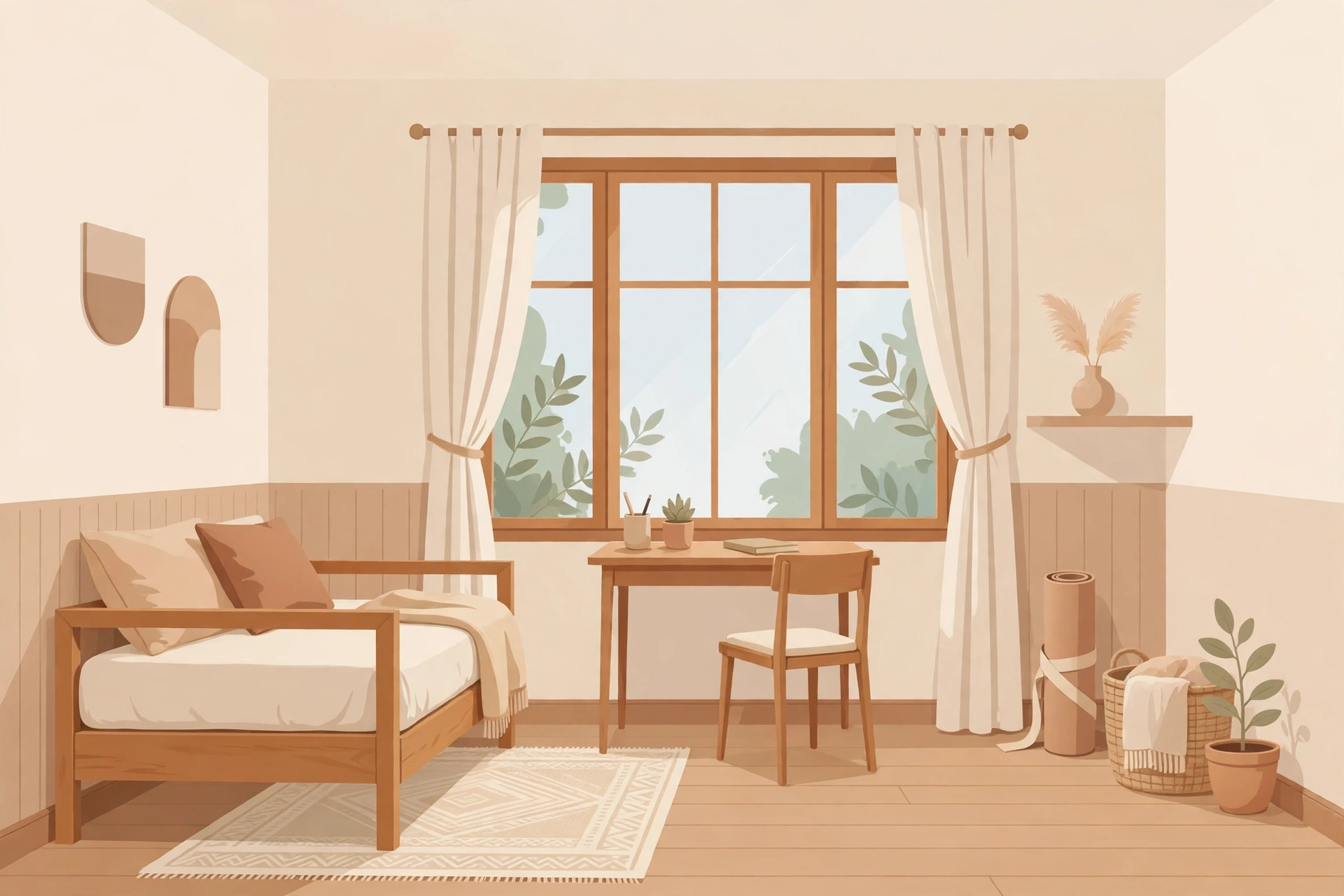
Take a standard 11 by 12 foot bedroom as the working example. It is large enough for all three jobs and small enough that zoning cannot be left to chance. The table below assigns each zone a footprint, a position, and a switchover time, which is the real test of a multipurpose room: if changing the room takes more than ten minutes, it will not happen.
| Zone | Position | Footprint | Switchover |
|---|---|---|---|
| Office (daily) | Window wall, permanent desk | 48 x 24 in desk + 36 in chair zone | None — always ready |
| Guest sleep (monthly) | Opposite wall, foldaway bed | 75 x 54 in when open | Under 10 minutes |
| Workout (several times a week) | Centre floor, cleared on use | 72 x 24 in mat space | Under 3 minutes |
The office goes by the window because it is used daily and benefits most from daylight, and because a desk is the hardest item to move. The guest bed goes on the opposite wall so the office does not have to be dismantled when guests arrive. The workout zone is not a piece of furniture at all: it is the clear floor in the centre of the room, kept clear by everything else having a home. If the centre fills with boxes, laundry, or a drying rack, the workout zone disappears first, and with it the habit.
Storage is what makes the zones hold. One tall wardrobe or two large storage ottomans should hold all guest bedding, workout accessories, and office overflow, so that switching the room means opening a cupboard, not moving piles from one surface to another. For the office corner itself, our home office in a small space guide gives desk depths and lighting rules that transfer directly to a guest-room desk.
Choosing the Bed: Sofa Bed, Murphy Bed or Daybed?
The bed choice decides how the room feels on the 350 days a year when no guest is in it, so it deserves more thought than the mattress brand. Each option trades comfort, cost, and everyday appearance differently.
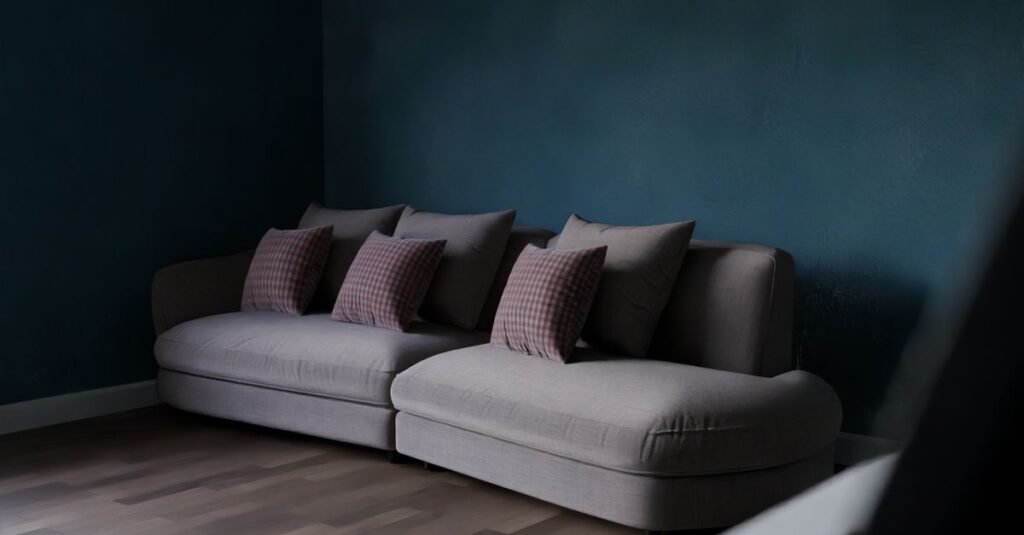
A sofa bed is the cheapest and most familiar option, typically $400 to $800 for a usable full-size model, and it gives the room a proper seat for daily use. Its weakness is comfort: thin sofa-bed mattresses suit a weekend, not a week, and a good mattress topper, $60 to $100, is almost mandatory. A Murphy bed, or wall bed, is the most space-efficient, folding up to reveal a desk or clear floor, but it costs $1,200 to $2,500 installed and needs a solid wall and professional fitting. A daybed is the middle path: it looks like a sofa, sleeps like a single or twin bed, costs $300 to $700, and needs no folding mechanism at all, but it only sleeps one adult comfortably and two only at a squeeze.
For a room that hosts couples more than once a year, a full-size sofa bed with a topper, or a Murphy bed if the budget allows, is the honest choice. For a room that hosts one guest at a time, or that doubles as a reading nook, a daybed is simpler, cheaper, and far less likely to break. Whichever bed is chosen, buy the bedding at the same time and store it in the room: guests should never have to ask where the sheets are, and the host should never have to hunt through another room’s linen cupboard.
The Office Corner That Disappears After Hours
A guest-room office works best when it is a complete workstation during the day and visually quiet in the evening. A 48-inch desk against the window wall, a wall-mounted shelf above it instead of a bookcase beside it, and a chair that tucks fully under the desk achieve most of this. A fold-down wall desk looks clever but usually fails in practice, because its surface is too small for a monitor and its storage is too shallow for real work; reserve fold-down desks for laptop-only use of an hour or two a day.
Cable management matters more in a multipurpose room than in a dedicated office, because guests notice cables that a daily worker stops seeing. A cable tray under the desk, a single power strip, and a small basket for chargers keep the corner presentable when the desk is not in use. A closed storage box on the desk, rather than open trays, lets the worker clear the surface in two minutes before guests arrive, which is the difference between a room that feels like an office with a bed and a room that feels like a guest room with a desk.
Where the Workout Gear Actually Goes
Workout gear fails in multipurpose rooms for one reason: it has no home, so it migrates to the floor, the chair, and eventually the bed. The fix is a single storage point, sized before anything is bought. A tall narrow cabinet, a large lidded basket, or one wardrobe section should hold a yoga mat, resistance bands, a pair of dumbbells, and a foam roller. Wall hooks for bands and a mat strap keep the floor clear, and a small mirror on the wardrobe door, rather than a separate leaning mirror, saves the 24 inches a leaning mirror consumes.
Flooring matters here too. A rug under the workout zone protects the floor and marks the zone’s boundary, but a thick pile rug makes balance exercises harder. A low-pile rug or a large exercise mat, 72 by 24 inches, laid over the room’s existing floor is the practical choice. If the room is also the household’s only quiet space, a rug plus a fabric wall hanging will soften sound more than any single purchase, and the room will feel less echoey for guests as a bonus. For layout ideas that keep a compact bedroom feeling open, our small bedroom layout ideas show how the same clear-centre principle frees space in any small room.
Common Mistakes That Ruin a Multipurpose Room
The first mistake is buying the bed before zoning the room. A king-size bed, however comfortable, leaves no office or workout zone in an 11 by 12 room, and the room becomes a bedroom again by default. Measure the zones first, then choose the largest bed that still leaves a 48-inch desk and a 72-inch mat space.
The second mistake is open storage everywhere. Open shelves look organised in photographs and collect visual clutter in real rooms, because every zone’s supplies are always on show. Closed storage, one cupboard per zone, makes the room look calm even when it is fully equipped. The third mistake is no switchover routine: if nobody knows where the guest bedding lives, how the bed unfolds, or where the desk clutter goes, guests arrive to a half-converted room and the host spends the first evening apologising. Write the routine down, tape it inside the wardrobe door, and test it once before the first guest arrives.
The fourth mistake is forgetting lighting. A single overhead light flatters nobody and serves no zone well. A desk lamp for the office, a bedside lamp for guests, and the overhead light for workouts give each job its own light, and each lamp costs $20 to $40. Finally, do not let the room become the household dumping ground between guests. A room with three jobs needs a firmer rule than a single-purpose room: if an item has no zone, it does not live in this room.
Key Takeaways
- Zone first, furniture second: daily office by the window, guest bed on the opposite wall, workout space as clear centre floor.
- Choose the bed by guest frequency: sofa bed with a topper for couples, daybed for single guests, Murphy bed only if the budget reaches $1,200 or more.
- One closed storage point per zone keeps the room calm and makes switchover take under ten minutes.
- Test the full guest switchover once before anyone stays over, and keep the routine inside the wardrobe door.
- Three lights, one per zone, cost under $120 in total and change how the room feels more than any single furniture piece.
A multipurpose guest room is not three rooms crammed into one. It is one room with a clear daily job, a fast monthly transformation, and storage disciplined enough to support both. Plan the zones, choose the bed that fits the guests who actually visit, and keep the centre of the room clear, and the room will earn its floor space every week of the year instead of a few weekends. For the finishing touches that make guests feel genuinely welcome, our bookshelf styling guide shows how a single styled shelf can make a multipurpose room feel intentional rather than improvised.