

Japandi — the blend of Japanese minimalism and Scandinavian warmth — is one of the most searched living room styles right now, and also one of the easiest to copy badly. Most Japandi inspiration photos feature custom low-profile furniture and handcrafted ceramics that cost more than a month’s rent. The good news: the look does not come from expensive pieces. It comes from a short list of repeatable decisions — a muted palette, low visual clutter, natural textures and space to breathe around each object. Every one of those decisions can be made with what you already own plus a few inexpensive swaps.
Quick answer: You can get a convincing Japandi living room for under $300 by repainting or softening your palette to warm off-white, removing about a third of your visible decor, lowering one or two furniture silhouettes, and adding three natural textures — linen, light wood and woven fiber. The nine changes below total roughly $285 at typical US big-box and thrift prices.
The 9 Changes, in the Order to Do Them
Work top to bottom. The first three changes are free, and they do more for the look than anything you can buy.
1. Remove a third of what is visible (free)
Japandi rooms typically show 30–40% less decor than an average living room. Box up a third of your shelf objects, throw pillows and wall pieces, live with the emptier room for a week, then bring back only the pieces you missed. Negative space is the style’s main ingredient, and it costs nothing.
2. Lock the palette to three colors (free–$45)
Pick one warm white or soft beige for the largest surfaces, one mid-tone wood or tan, and one muted accent (sage, clay or charcoal). If your walls are a cool bright white or grey, a single gallon of warm off-white paint ($35–$45) on the main wall changes the temperature of the whole room. Our guide to paint colors that make small rooms feel bigger lists warm whites that work at this scale.
3. Lower the visual center of the room (free)
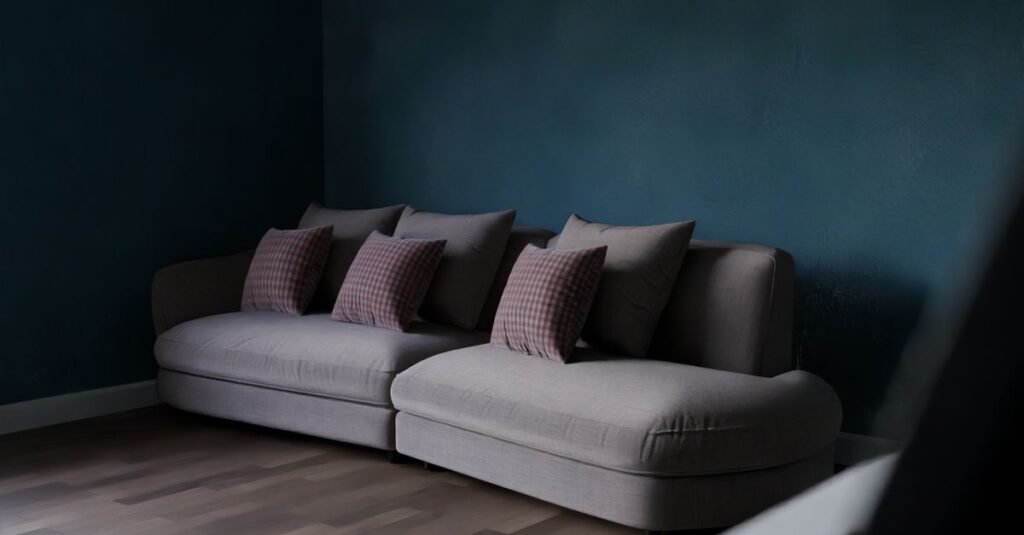
Japandi furniture sits low: sofa seat heights around 15–17 inches and coffee tables around 12–14 inches are typical. You cannot shrink a sofa, but you can remove tall, leggy side pieces, move floor lamps to lower table lamps, and hang art lower than usual — center of the piece at about 55 inches from the floor instead of the standard 57–60.
4. Swap in linen-look cushion covers ($25–$40)
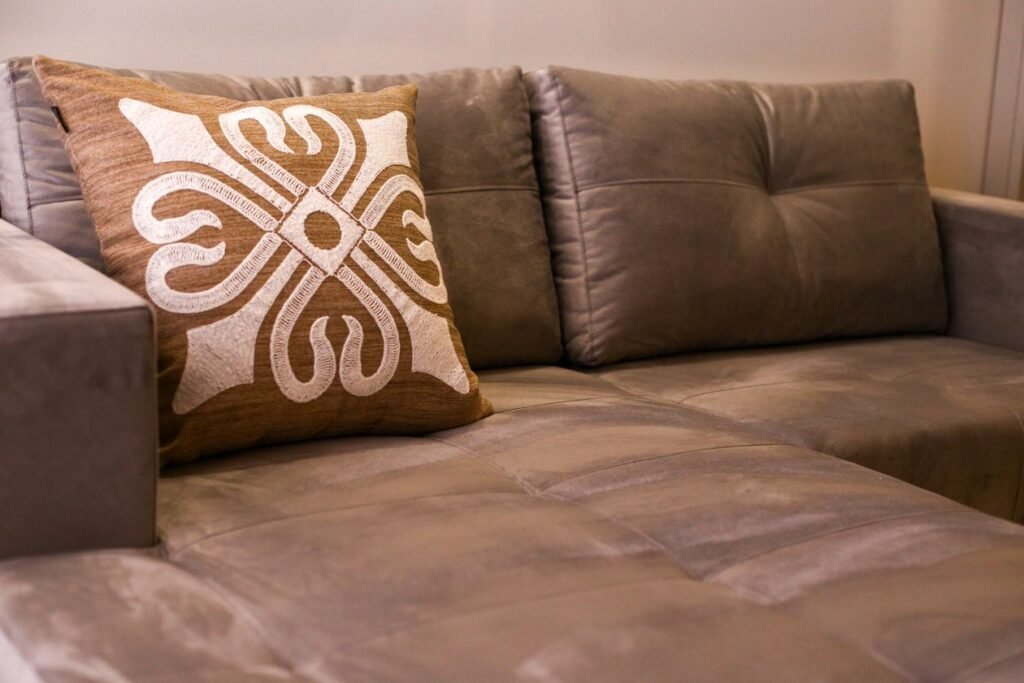
Replace shiny or busy pillow covers with plain linen or linen-blend covers in your palette’s mid-tone. Covers for existing inserts cost $6–$10 each; four covers transform a sofa more than a new throw ever will. Keep pillows to two or three per sofa — Japandi is not a pillow-maxxing style.
5. Add one woven texture: a jute or seagrass rug layer ($60–$90)
A flat-weave natural-fiber rug under (or layered over) your existing rug adds the organic texture the style runs on. A 5×7 ft jute rug runs $60–$90. Check it against our living room rug size guide first — in Japandi rooms the rug should still reach under the front legs of the sofa.
6. Bring in one light-wood piece ($30–$60, thrifted)
Pale oak, birch or bamboo tones are the wood signature. A thrifted side table, stool or tray in light wood does the job; sanding and a clear matte finish can lighten a darker thrift find in an afternoon. Our thrift store decor flips guide covers the sanding-and-sealing process step by step.
7. Replace one statement object with a branch or a plant ($10–$25)
Instead of a cluster of small ornaments, Japandi rooms use a single sculptural natural element: a tall branch in a heavy vase, a olive-style faux stem arrangement, or one real plant with visible structure. Height matters more than fullness — aim for a piece 24–36 inches tall.
8. Soften the light to 2700K and add paper texture ($15–$30)
Swap harsh daylight bulbs for warm 2700K bulbs, and if you have an exposed-bulb fixture, add a paper or fabric shade. A rice-paper-style pendant shade ($15–$30) is one of the most recognizable Japandi lighting moves and diffuses light the way the style demands: soft, shadow-light, evening-warm.
9. Hide the modern clutter, visibly (free–$20)
Remotes, chargers and game controllers break the calm faster than any wrong color. One lidded basket or wooden box ($10–$20) on the coffee table or shelf, used religiously, keeps the surfaces clear. Cables behind the media console get a $8 cable raceway or simple zip-tie tuck.
What Does a Japandi Living Room Actually Cost?
Adding the paid steps above: paint $40 + cushion covers $32 + jute rug $75 + thrifted wood piece $45 + plant or branch $18 + paper shade and bulbs $25 + storage box and cable tidy $20 = about $255–$285, depending on your thrift luck. Compare that with a single new low-profile “Japandi-style” sofa, which typically starts around $900. The style is a palette-and-restraint system, not a furniture collection — which is exactly why it copies well on a budget. If your room is small, pair these changes with the layouts in our small living room layout guide; Japandi restraint and small-space planning reinforce each other.
Three Mistakes That Make Budget Japandi Look Wrong
- Going all-white. Without warm wood and at least one mid-tone, the room reads Scandinavian-clinical, not Japandi. The wood is not optional.
- Buying “Japandi-style” decor sets. Matching beige vases and faux-wood ornaments from one product line look staged. Mix thrifted, plain and natural pieces instead.
- Keeping standard furniture heights and filling the walls. Tall bookcases packed edge-to-edge and art hung at gallery height undo the low, spare feeling no matter what colors you use.
Frequently Asked Questions
What colors define a Japandi living room?
Warm off-white, soft beige and greige as the base; light natural wood as the second color; and one muted accent such as sage, clay, stone grey or charcoal. Avoid bright white, cool blue-grey and saturated colors, which fight the warm, low-contrast effect.
Can I do Japandi in a rental?
Yes — eight of the nine changes above are renter-safe. Skip the paint (change 2) if your lease forbids it and lean harder on textiles and the rug layer, which cover most of the visible wall-to-floor impression anyway.
Is Japandi the same as minimalism?
Not quite. Minimalism removes things for its own sake; Japandi keeps fewer things but insists they be warm, natural and functional. A minimalist room can feel empty; a Japandi room should feel calm and lived-in, with wood, linen and woven texture in every sightline.
What furniture should I replace first if I have more to spend?
The coffee table. A low (12–14 inch), simple light-wood coffee table changes the room’s proportions more than any other single piece, and solid options exist from about $120. The sofa matters second; low arms and a seat height under 17 inches are what to shop for.
Does Japandi work in a small living room?
It is one of the best styles for small rooms, because the decluttering, low silhouettes and pale palette all make a space feel larger. Keep the rug proportional, limit yourself to one plant statement, and let one wall stay completely empty.
One Comment