Foldaway furniture is the difference between a room that does one job and a room that does three. A queen bed claims about 35 square feet of floor around the clock, even though it is used for roughly eight hours of it. A wall bed, a drop-leaf desk or a folding guest bed hands that floor back for the other sixteen hours, which is why foldaway pieces show up in almost every small-apartment and multipurpose-room plan. The catch is that the savings only exist if the piece fits the room in both positions — folded and open — and if the price, the mechanism and the installation were honestly counted before the box arrived.
| Foldaway piece | Folded footprint | Open footprint | Typical price | Best for |
|---|---|---|---|---|
| Vertical wall bed (queen) | About 65 in wide, 16–18 in deep | 65 × 87 in of floor | $550–$1,950 | Guest room, home office |
| Horizontal wall bed (queen) | About 87 in wide, 16–18 in deep | 87 × 65 in of floor | $580–$1,350 | Low ceilings, wide walls |
| Cabinet bed (queen) | About 63 × 22 in, freestanding | 63 × 80 in of floor | $450–$1,180 | Renters, no wall anchoring |
| Drop-leaf desk or table | 3–12 in from the wall | About 30 × 24 in of surface | $100–$400 | Studio, work-from-home corner |
| Folding guest bed | Stores in a closet | About 38 × 75 in (twin) | $150–$300 | Occasional overnight guests |
| Convertible sofa bed | Standard sofa footprint | About 54 × 76 in (full) | $350–$1,200 | Living room that hosts guests |
How Much Floor Space Does a Wall Bed Really Free Up?
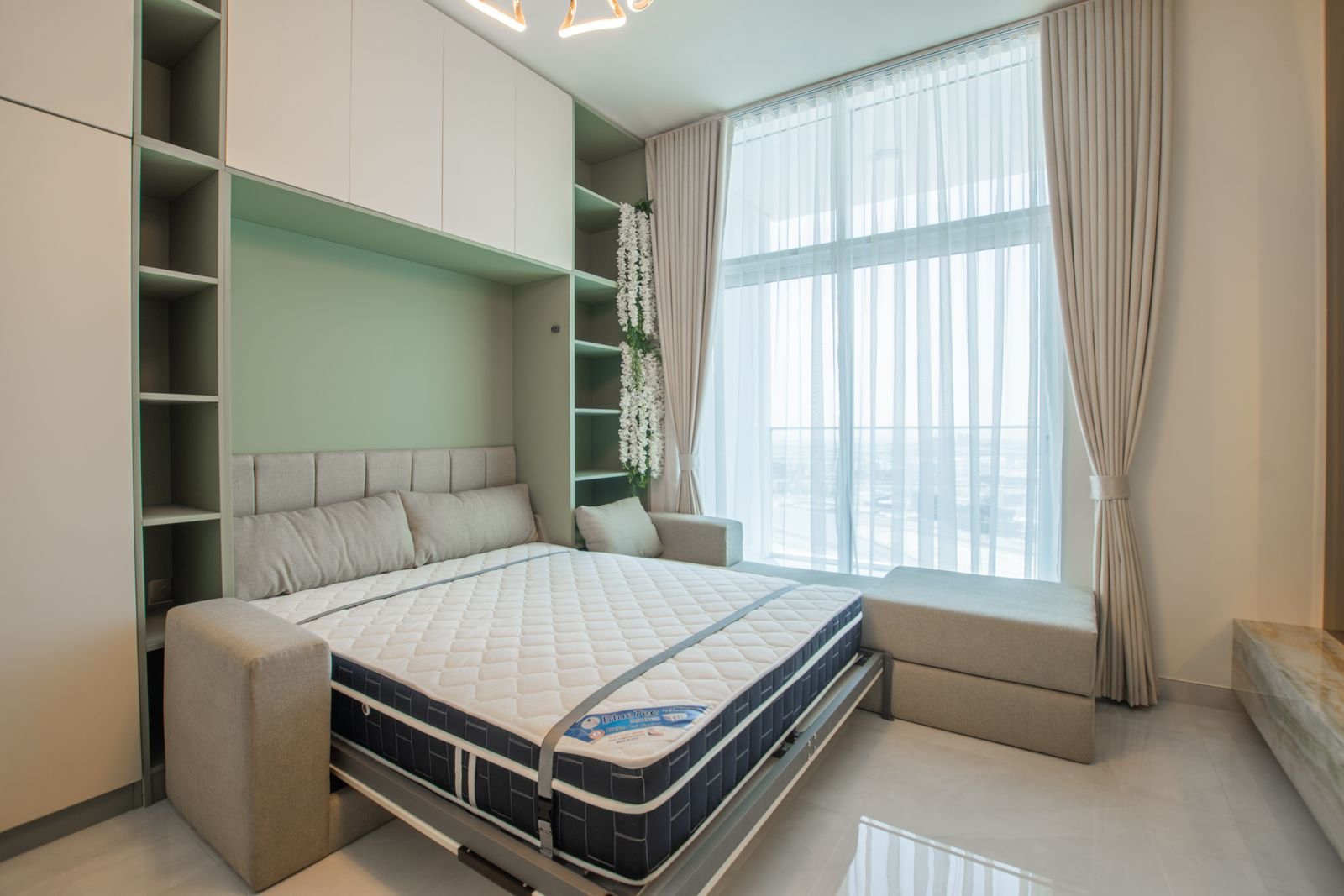
A queen wall bed frees roughly 25 to 30 square feet of floor during the day, which is the footprint of a small desk area plus a walkway. That number is only real if the bed is folded every morning, so the honest test is whether the mechanism is easy enough to use daily. Gas-piston and spring-assisted mechanisms do most of the lifting; a bed that takes two people and a wrestling match to close will stay open, and the saved space never happens.
The clearance math matters more than the cabinet size. A queen mattress is 60 by 80 inches, and the folded bed projects 16 to 18 inches from the wall, so the open bed reaches about 87 inches into the room once the frame is counted. Leave at least 30 inches of clear walkway at the foot of the open bed, or the room becomes a corridor with a mattress in it. A vertical wall bed also needs ceiling height: most queen models need about 89 inches of clear ceiling, so measure before ordering, not after delivery. A horizontal wall bed trades height for width and suits rooms with low ceilings and a long empty wall. For the room the bed will live in, the layout rules in Small Bedroom Layout Ideas: 6 Floor Plans That Actually Work show how to place the bed, desk and storage around that open footprint.
Which Foldaway Piece Fits Which Room?
Start from what the room must do most often, because the wrong foldaway piece solves a problem the room does not have. A studio apartment needs the bed to disappear so the same floor can be a living room by day; a vertical wall bed with a sofa in front of the cabinet does that job. A spare room that is an office five days a week and a guest room two nights a month needs a wall bed with a desk, or a cabinet bed that leaves the desk permanently in place. A dining corner that doubles as a workspace needs a drop-leaf table, not a bed at all.
The studio: one wall, two jobs
In a studio, the wall bed is the room divider. A vertical queen wall bed against the longest wall, with the cabinet finished to match the kitchen or wardrobe, reads as furniture when closed and becomes the bedroom at night. Keep the daytime furniture light and movable — a folding chair, a nesting side table — so nothing blocks the 87-inch swing of the bed. The desk should be a separate drop-leaf or a rolling cart, because a wall bed with a built-in desk is heavier, more expensive and harder to install than two separate pieces.
The guest room that is also an office
This is the most common multipurpose room in the US, and it is where a cabinet bed earns its price. A freestanding cabinet bed needs no wall anchoring, so it suits renters and anyone who does not want to drill into studs, and it leaves the desk, monitor and office chair exactly where they are. When guests arrive, the cabinet opens into a real queen bed with a real mattress, and the bedding lives in the cabinet drawers between visits. The full zoning plan for this room is in Multipurpose Guest Room Ideas: Office, Gym & Guest Space in One.
The kids room and the dining corner
Children’s rooms suit fold-down bunk beds and daybeds with trundles, which give two sleeping surfaces without a second bed frame — but check the weight rating, usually 250 pounds or more per bunk for adult-safe models, and confirm the safety rails deploy automatically. A dining corner suits a gateleg or drop-leaf table that folds to a 10-inch console against the wall and opens to seat four or six. Both are cheap, simple mechanisms with almost nothing to break, which is the right trade when the piece will be folded and unfolded by children or daily.
What Does Foldaway Furniture Cost? A Worked Budget
Prices spread wider than most furniture categories, because a wall bed is part furniture and part mechanism. Budget cabinet beds and folding frames start around $450 to $550; mid-range wall beds with storage and lighting run $850 to $1,350; premium transforming systems from brands such as Resource Furniture or Clei start at $3,000 to $4,000 and climb from there. Drop-leaf tables run $150 to $800, wall-mounted folding desks $100 to $400, folding chairs $50 to $300 for a set, and storage ottomans $80 to $250. A tri-fold floor mattress for occasional guests costs $90 to $180 and needs no mechanism at all.
Below is a worked budget for turning a 10-by-12 spare room into a real office-plus-guest-room with foldaway pieces, using mid-range prices rather than the cheapest listing or the premium one.
| Line item | Typical cost |
|---|---|
| Queen cabinet bed with storage drawers | $850 |
| Wall-mounted drop-leaf desk, 30 × 24 in | $180 |
| Two folding chairs, padded | $120 |
| Tri-fold floor mattress for a second guest | $90 |
| Hardware, wall anchors and assembly help | $150 |
| Total multipurpose-room setup | $1,390 |
Compare that with the alternative: a permanent queen bed frame and mattress plus a separate desk and a sleeper sofa runs $1,800 to $2,500 and still leaves the room single-purpose. The foldaway setup costs less and the room stays usable every day. The number to watch is installation: a wall bed that must be anchored to studs can add $150 to $400 for a handyman if the wall needs blocking behind the drywall, and that cost belongs in the budget before the order, not after delivery.
Can Renters Use Foldaway Furniture?
Yes, with one rule: nothing that must be bolted to the wall belongs in a rental without written permission. Wall beds anchor into wood studs or masonry, and a unit that tips forward when opened is a real safety risk, so the anchoring is not optional. Most landlords will approve a wall bed that is professionally anchored and patched on move-out, but get that approval in writing before drilling, and photograph the wall before and after.
The renter-safe picks need no permission at all. Freestanding cabinet beds unfold without touching the wall. Folding guest beds, tri-fold mattresses and convertible sofa beds move in and out like any furniture. Drop-leaf tables that mount with a French cleat or lean against the wall need only two small screw holes, which most leases treat the same as hanging a picture. The pieces to skip as a renter are built-in wall-bed systems and anything that needs blocking installed inside the wall.
The 10-Minute Measure-Before-You-Buy Check
Most foldaway furniture returns happen for one reason: the piece fits the wall but not the room. Run this check with a tape measure before ordering. First, measure the wall the cabinet will sit against, including ceiling height — 89 inches for a vertical queen wall bed — and mark the stud positions, because the anchors must land in studs. Second, measure the open footprint on the floor with painter’s tape: 87 inches out from the wall for a queen, plus 30 inches of walkway at the foot. Third, check the door swing, the wardrobe doors and the desk chair, because a bed that blocks the only exit when open fails the room even if it fits the tape. Fourth, confirm the mattress limits: most wall beds accept mattresses up to 10 to 12 inches thick and around 70 pounds, and a mattress that is too thick or too heavy stops the bed from closing. Fifth, check where the bedding goes when the bed is folded — if the bedding must come off every time, the bed will not be folded daily. Draw both layouts, daytime and nighttime, on one sheet of paper; if either one blocks a door, the piece is the wrong size for the room. The same measuring discipline applies to the desk side of the room — see Home Office in a Small Space: Setup Ideas That Work for desk depths and chair clearance that pair with a foldaway bed.
What to Check Before the Delivery Truck Arrives
Three checks separate a foldaway piece that lasts ten years from one that squeaks in six months. Check the mechanism type: gas-piston lifts are smoother and quieter than spring systems, and soft-close hardware protects both the wall and the cabinet. Check the weight rating and the warranty on the mechanism itself, not just the frame — a lifetime frame warranty means little if the pistons are covered for one year. And check the mattress rules in writing: thickness, weight, whether bedding can stay on when folded, and whether the sleeping surface has a join or a bar that will be felt every night. A sofa bed bought for nightly sleep needs the same scrutiny as a mattress, because the frame, the support slats and the conversion mechanism decide comfort far more than the brand name does.
How much does a Murphy bed cost?
A budget queen Murphy bed or cabinet bed typically costs $450 to $650, mid-range models with storage and lighting run $850 to $1,350, and premium transforming systems start at $3,000 to $4,000. Installation can add $150 to $400 if the wall needs blocking or a handyman, so include it in the budget before ordering.
Can a renter install a wall bed?
A wall bed must be anchored into wood studs or masonry, so it needs the landlord’s written permission before drilling. Renters who cannot get permission should choose a freestanding cabinet bed, a folding guest bed or a convertible sofa bed, all of which need no wall anchoring at all.
How much clearance does a wall bed need?
A queen wall bed reaches about 87 inches into the room when open, and needs at least 30 inches of clear walkway at the foot. A vertical wall bed also needs about 89 inches of ceiling height. Measure the open footprint with painter’s tape, and check the door swing before ordering.
Is a sofa bed comfortable enough for nightly sleep?
It can be, but only if it was built for it. Check the mattress thickness and density, whether the frame creates pressure points, and whether replacement parts are available. Sofa beds built mainly for occasional guests often sag within months of nightly use, so test the sleeping surface as carefully as a regular mattress.
Foldaway furniture earns its place when the room genuinely needs two jobs and the piece fits in both positions. Measure the wall and the open footprint, price the installation with the furniture, and pick the mechanism for daily use rather than the showroom demo. Done that way, a $1,390 setup turns a spare room into an office that hosts guests — and the floor stays yours for the sixteen hours a day nobody is sleeping on it.