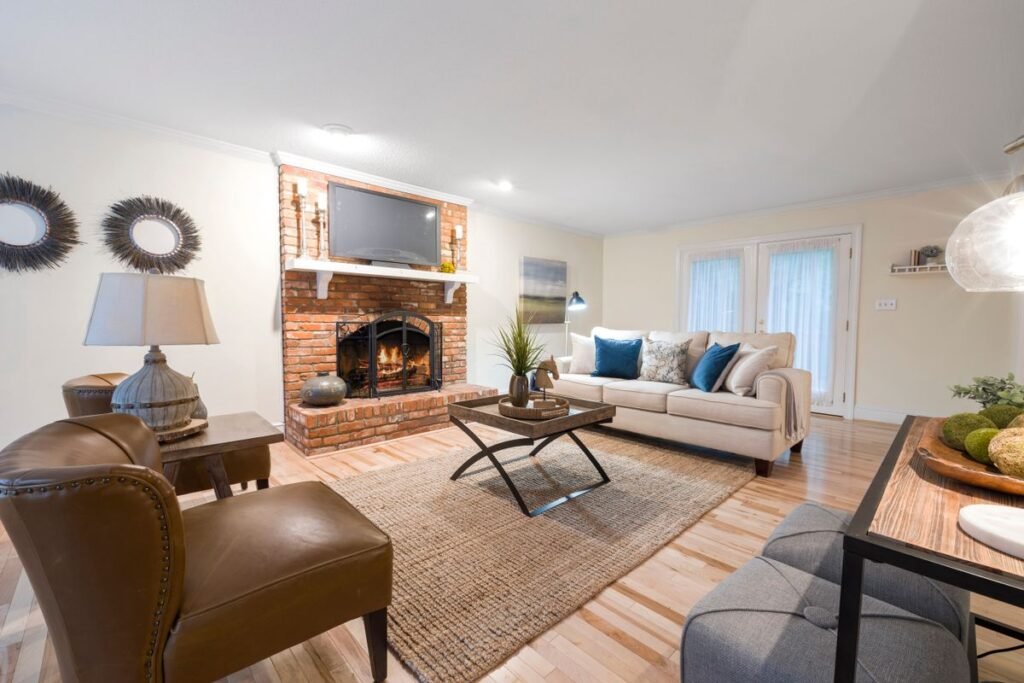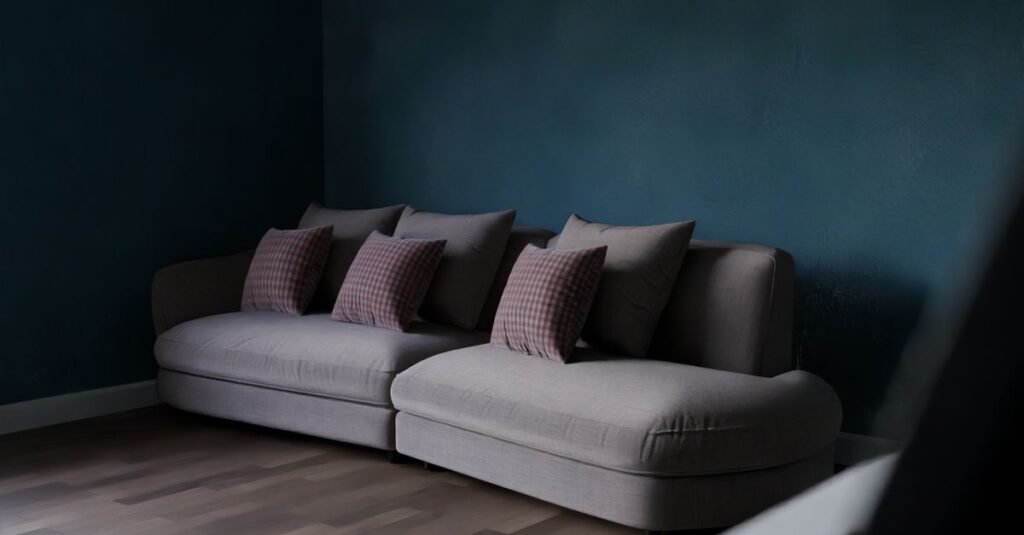
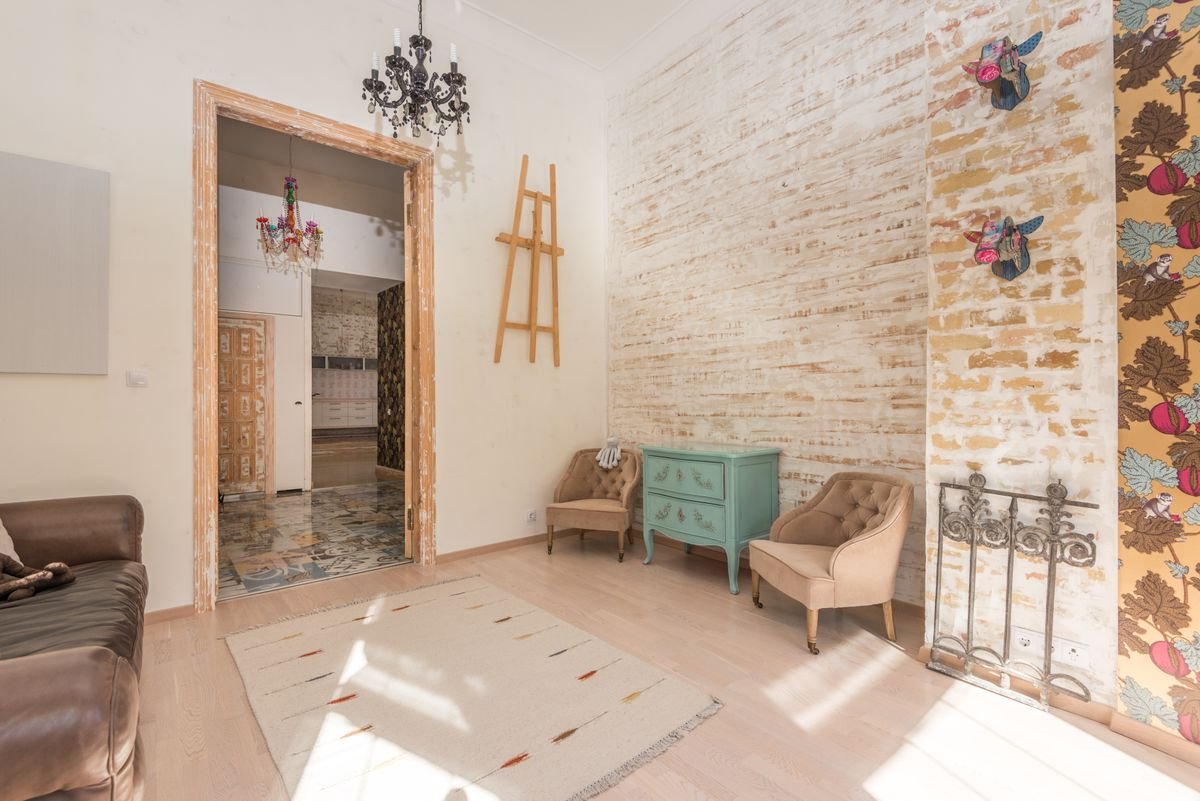
Eclectic decor on a budget works because the style was never meant to be bought in one trip. The rooms that pull it off look collected over time: a thrifted wooden chair next to a modern sofa, a vintage lamp over a new rug, art from three different decades sharing one wall. The rooms that fail look like a yard sale moved indoors, and the difference is not money. It is a small set of rules about how many styles to mix, how much of each colour to use, and when to stop adding. This guide gives those rules with real prices: a 70-20-10 style formula, a colour palette that holds mixed pieces together, a $300 room plan with line items, and the measurements that keep a gallery wall looking intentional.
Quick answer: Eclectic decor on a budget means mixing no more than three styles in a 70-20-10 split, holding them together with one 60-30-10 colour palette, and buying secondhand first. A full living room can be done for around $300: roughly $120 on a thrifted anchor piece, $80 on textiles, $60 on a gallery wall and $40 on plants and small objects.
What Makes a Room Eclectic, and What Makes It a Mess?
Eclectic is not a synonym for random. A room reads as eclectic when the mix is deliberate: different eras, textures and shapes that share something in common, usually colour or material. A room reads as a mess when every object competes for attention and nothing repeats. The fix is a ratio, and it is the single most useful rule in this guide.
Use a 70-20-10 style split. Pick one dominant style for about 70 percent of the room, a second style for about 20 percent, and a third style for the final 10 percent as accents only. A common combination that works in most American living rooms is 70 percent modern (the sofa, the rug, the main lighting), 20 percent vintage (a wooden sideboard, a brass lamp, a leather chair) and 10 percent boho or global (patterned cushions, a woven basket, a ceramic vase). The dominant style sets the room’s shape and scale; the second style adds character; the third style adds surprise. Three styles is the ceiling. A fourth style almost always tips the room from collected into cluttered, because the eye has no dominant pattern to rest on.
The same thinking applies to materials. Repeat each material at least twice: if there is a brass lamp on one side of the room, put a brass frame or a brass tray on the other side. If there is one rattan basket, add a rattan tray or a woven pendant shade. Repetition is what tells the eye the mix was chosen, not accumulated by accident. One-offs are fine for small objects, but every large piece should have a visual partner somewhere in the room.
Start With a 60-30-10 Colour Palette
Colour is the glue. Without a palette, mixed styles fall apart; with one, almost anything can sit next to anything else. The 60-30-10 rule is the simplest version: 60 percent of the room in one dominant colour, usually a neutral such as warm white, soft grey or sage; 30 percent in a secondary colour, such as navy, forest green or terracotta; and 10 percent in an accent colour, such as mustard, rust or teal.
Measure it loosely, not with a calculator. The dominant colour covers the walls, the sofa and the largest rug. The secondary colour shows up in the curtains, the second-largest rug or the accent chair. The accent colour appears in cushions, art and small objects, and nowhere else. When a thrifted piece does not fit the palette, it is usually the wrong piece, no matter how cheap it is. A $10 chair in the wrong colour costs more in visual noise than it saves in money.
Paint is the cheapest palette tool there is. A quart of paint costs $12 to $18 and transforms a thrifted side table, a frame or a lamp base in an afternoon. Before buying a new piece to match the room, check whether paint can make an existing piece match instead. Spray paint in matte black, warm brass or sage green rescues more secondhand furniture than any other single purchase.
Where to Find Eclectic Pieces for Under $25 Each
Eclectic decorating is cheap because the style rewards secondhand shopping. New matching sets are the enemy of this look; one-off pieces are the whole point. Set a price cap before shopping so a bargain never becomes an impulse buy: $25 for small decor, $60 for a side table or chair, $120 for a large anchor piece such as a sideboard or armchair.
Thrift stores and flea markets are the best source for wood furniture, lamps, frames and ceramics, usually $5 to $40 per piece. Check the structure before the surface: wobbly legs, cracked veneer and missing hardware are fixable, but a warped frame or a broken joint is not worth any price. Facebook Marketplace and neighbourhood buy-nothing groups are the best source for larger pieces, often free or under $50, because sellers want them gone the same weekend. Estate sales on their final day, when prices commonly drop by half, are the best source for art, mirrors and collections of small objects.
For new pieces, buy only what secondhand cannot provide reliably: plain linen cushion covers ($8 to $15 each), a neutral jute rug ($60 to $90 for a 5 by 7 foot size), and simple black or wood frames bought in bulk. Keep receipts and a running total. Eclectic rooms creep over budget quietly, $12 at a time, and a written total is the only thing that stops it.
How Much Does an Eclectic Room Cost? The $300 Plan
A realistic budget for one living room, assuming the sofa and the main rug already exist, is around $300. The table below is a complete plan, not a wish list: every line has a price and a source, and the total includes the small items people forget, such as paint and picture-hanging hardware.
| Item | Source | Budget |
|---|---|---|
| Thrifted wooden sideboard or armchair | Thrift store or Marketplace | $120 |
| Two cushion covers + one throw | Discount store | $35 |
| Layered rug, 4 by 6 ft patterned over existing rug | Discount store | $45 |
| Gallery wall: 5 thrifted frames + prints | Thrift store + free printables | $40 |
| Brass lamp + spray paint for two pieces | Thrift store + hardware store | $25 |
| Two plants in thrifted pots | Nursery + thrift store | $20 |
| Picture-hanging hardware + hooks | Hardware store | $15 |
| Total | $300 |
If the budget is tighter, cut in this order: the layered rug first, then one plant, then the throw. Never cut the gallery wall or the paint, because those two items do the most work in making the mix look intentional. If the budget is larger, spend the extra money on one better anchor piece rather than on more small objects. One $120 sideboard improves a room more than twelve $10 objects.
How to Mix Patterns Without Clashing
Pattern mixing is where eclectic rooms usually go wrong, and the rule is about scale, not taste. Combine one large-scale pattern, one medium-scale pattern and one small-scale pattern, and keep them in the same colour family. A large floral cushion, a medium stripe throw and a small geometric rug can share a room happily if all three contain the same navy or the same rust. Three patterns at the same scale, even in matching colours, will fight each other.
Give patterns breathing room. A solid-coloured cushion between two patterned ones, or a plain stretch of wall between two busy art prints, lets the eye rest. As a practical limit, keep patterned surfaces to about a third of the room’s visible textiles: if the rug is patterned, the sofa stays solid; if the curtains are patterned, the cushions stay mostly solid. For a deeper guide to scale and colour in pattern mixing, see the room-by-room rules in Mixing Patterns Like a Designer.
Build a Gallery Wall That Looks Collected, Not Random
A gallery wall is the fastest way to make an eclectic room feel finished, and the cheapest, because the art can be free printables, postcards, fabric scraps in frames and thrifted prints. The measurements matter more than the art itself. Space frames 2 to 3 inches apart, never more, or the wall reads as scattered rather than grouped. Keep the centre of the whole arrangement at 57 to 60 inches from the floor, which is average eye level. Above a sofa, the arrangement should span about two-thirds of the sofa’s width and sit 6 to 8 inches above the sofa back.
Mix frame styles deliberately: two black frames, two wood frames and one brass frame, for example, with the same 2 to 3 inch spacing throughout. Lay the arrangement on the floor first and photograph it before hanging anything. The floor test catches the two usual mistakes: one frame much larger than the rest sitting off-centre, and a gap wider than 3 inches that breaks the group in two. For step-by-step thrifted decor projects, including frame hunting and refinishing, see Thrift Store Decor Flips.
Eclectic Decor FAQs
How many styles can you mix in one eclectic room?
Three is the practical maximum: one dominant style at about 70 percent, a second at about 20 percent and a third at about 10 percent for accents. A fourth style usually makes the room feel cluttered rather than collected, because no single style dominates enough for the eye to find a pattern.
Does eclectic decor have to be colourful?
No. Eclectic describes the mix of styles and eras, not the amount of colour. A calm eclectic room uses a neutral 60-30-10 palette with the variety coming from texture and shape instead: linen against leather, wood against metal, round against rectangular. Colour is optional; contrast is not.
What is the cheapest way to start an eclectic room?
Start with paint and textiles, not furniture. A $15 quart of paint, two $10 cushion covers and a $25 thrifted lamp change a room’s character for about $50. Add one larger thrifted piece next, then a gallery wall. Buying small objects first is the most common budget mistake, because they add clutter without changing the room.
How do you stop an eclectic room from looking cluttered?
Use the one-in-one-out rule: every new object that enters the room means one object leaves it. Leave about a third of every shelf and surface empty, repeat each colour and material at least twice, and remove one thing before calling the room finished. If a surface has more than five objects on it, take two away and see whether the room improves.
Eclectic decor on a budget is a slow style, and that is its advantage. Buy one piece at a time, check it against the 70-20-10 split and the colour palette, and let the room accumulate over weeks rather than a weekend. The result looks collected because it genuinely was, and it costs a fraction of a matching set precisely because no two pieces came from the same place.