Biophilic design has a reputation problem. Most guides show it as either a jungle of houseplants or a five-figure renovation with a living wall and a skylight, and neither version helps anyone with a normal room and a normal budget. The real idea is simpler and cheaper than both. Biophilic design means shaping a room around the things humans are wired to respond to: daylight, living plants, natural materials, organic shapes and fresh air. A room that does that feels calmer and more comfortable, and most of it can be done in a weekend for about $200, with no renovation and no drilling.
Quick answer: Start with light, not plants. Clear the windows, swap heavy curtains for sheer linen, and move seating within 3 feet of a window. Then add one large plant, a jute rug and two linen textures for about $120, and finish with a wooden tray and a thrifted rattan piece for another $50. That is a complete biophilic room for under $200.
What Biophilic Design Actually Is (and Is Not)
The word comes from the biophilia hypothesis — biologist E.O. Wilson’s argument that humans have an innate need for contact with nature — and the design framework that grew out of it is Terrapin Bright Green’s 14 Patterns of Biophilic Design. The patterns cover three things: nature in the room (plants, water, light, air, scent), natural analogues (wood grain, organic shapes, natural materials), and the nature of the space itself (views, sheltered corners, a sense of prospect and refuge). Research cited in the Terrapin report links these patterns to lower heart rate, better focus and improved mood.
What matters for a budget version is that the patterns are levers, not a shopping list. A room with one large plant, oak furniture, linen curtains, plenty of daylight and a view of a tree outside can be more biophilic than a room packed with fifty small plants under artificial light. The goal is the feeling, not the count. That is also why the cheapest moves — rearranging furniture toward a window, opening curtains, grouping plants instead of scattering them — often do more than the most expensive ones.
The $200 Starter Plan: One Room, One Weekend
Here is the whole plan as a shopping list, priced at typical US retail and thrift prices. It assumes a living room, but the same list works in a bedroom by swapping the rug size down and the plant choice to a low-light variety.
| Item | What to buy | Cost |
|---|---|---|
| One statement plant | Fiddle-leaf fig or bird of paradise, 3 to 4 feet tall, in a terracotta pot | $35 to $60 |
| Two trailing plants | Pothos and spider plant, 6-inch pots | $16 to $30 |
| Jute or sisal rug | 5 by 8 feet, natural fibre | $80 to $120 |
| Linen cushion covers (2) | Raw linen or cotton-linen, 18-inch | $20 to $35 |
| Wooden tray | Solid wood, thrifted or new | $10 to $25 |
| Rattan or woven basket | Thrifted, for plant pots or throws | $5 to $15 |
| Sheer linen curtain panel | One panel to replace a heavy drape on the main window | $20 to $50 |
| Total | One room, one weekend | $186 to $335 |
The range is wide because the rug and the statement plant set the price. Buying the rug secondhand and choosing a smaller fig brings the total under $200 comfortably; buying both new pushes it toward $300. Either way, the structure is the same: light first, one big plant, one big natural texture underfoot, two linen textures at seating height, and two small wooden or woven objects to tie it together. Skip anything that does not fit that structure, because a scattered collection of small natural objects reads as clutter, not as design.
How do I start biophilic design with no budget at all?
Rearrange first. Move the main seating to face the best window, open the curtains fully during the day, and clear anything that blocks light from the glass. Then propagate: a single pothos cutting in water becomes a new plant in a month, and one $12 pothos can fill a room within a year. Those two moves cost nothing and deliver more of the effect than most purchases.
Plants That Earn Their Place
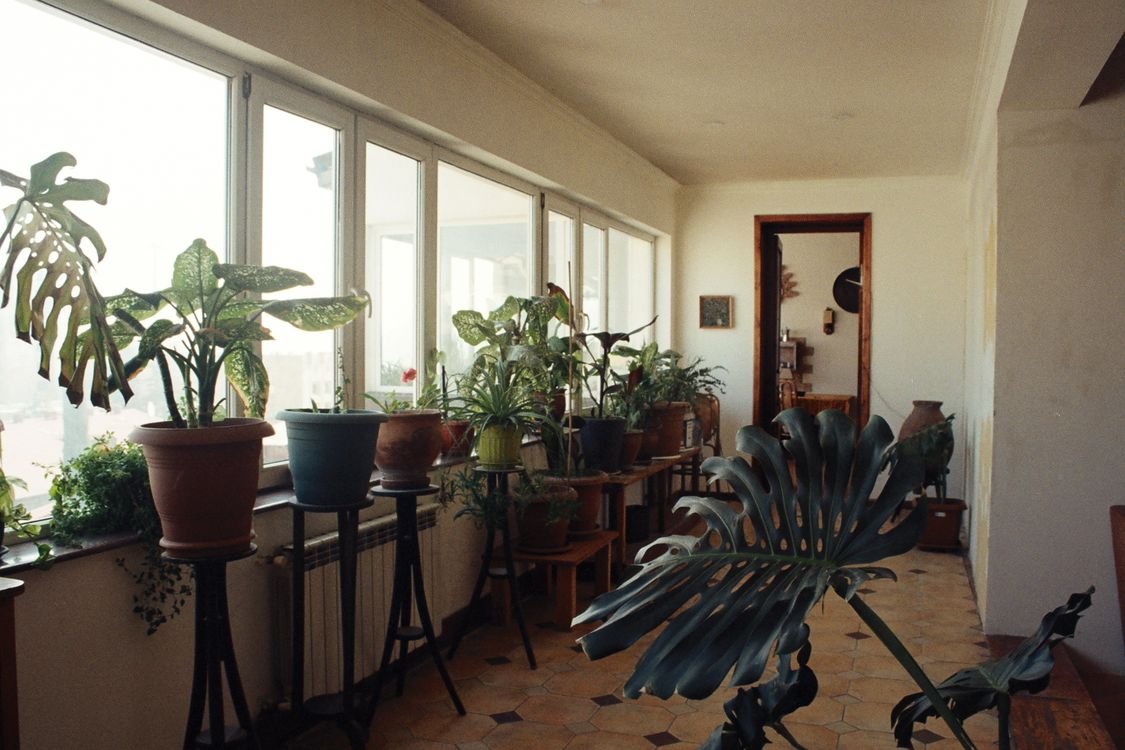
Choose plants by the light the room actually has, not by the light you wish it had. A plant that needs bright light in a north-facing room will die slowly and look worse every week, which is the opposite of the effect you want. Buy fewer plants, bigger ones, and group them. Five to eight plants of different heights and leaf shapes in one corner read as a small ecosystem; the same five plants scattered one per surface read as decoration that wandered off.
| Plant | Light it needs | Price | Best room |
|---|---|---|---|
| Snake plant | Low to bright, tolerates neglect | $10 to $20 | Bedroom, bathroom |
| Pothos | Low to medium, trails beautifully | $8 to $15 | Living room, office shelf |
| Spider plant | Medium, produces free babies | $8 to $15 | Kitchen, hanging basket |
| Peace lily | Low to medium, loves humidity | $12 to $25 | Bathroom |
| Fiddle-leaf fig | Bright, direct sun | $30 to $60 | Living room corner |
| Monstera | Bright, indirect | $25 to $45 | Living room, office |
| Fern | Medium, loves humidity | $8 to $15 | Bathroom |
The propagation trick is the real budget move. Pothos and spider plants multiply for free: snip a pothos stem below a node and root it in water for two weeks, or pot a spider plant baby the moment it grows roots. One $12 pothos bought in January can be six plants by December, and a spider plant does the same in a single growing season. That is how a $30 plant budget covers a whole room instead of a single shelf.
Is biophilic design expensive?
Not necessarily. The expensive version — living walls, skylights, stone countertops — runs into thousands of dollars, but the budget version works with plants, thrifted wood and better use of existing daylight. Most of the effect comes from light and layout, which are free, and from a handful of well-chosen natural textures, which are cheap.
Light First: The Free Upgrade
Natural light is the most powerful biophilic tool and the only one that costs nothing. Morning daylight at a window can reach 10,000 lux; a warm LED bulb at reading distance delivers 50 to 100. No bulb closes that gap, so the first job is to stop blocking the light you already have. Take down heavy blackout curtains and replace them with sheer linen panels, which cost $20 to $50 per panel and let daylight through while keeping privacy. Clear the windowsill, move tall furniture away from the glass, and put the desk or the reading chair within 3 feet of a window.
Mirrors do the second half of the job. A round mirror with a rattan, light-oak or bamboo frame, hung opposite or beside a window, bounces daylight deeper into the room and adds an organic shape at the same time. Thrift stores sell them for $10 to $30, and the round shape matters: nature rarely makes perfect rectangles, and one curved object softens a room full of straight lines. For rooms with genuinely poor daylight, a warm-white bulb at 2700K to 3000K in the evening keeps the mood natural after sunset, though it is a supplement to daylight, not a substitute for it.
Natural Texture Without New Furniture
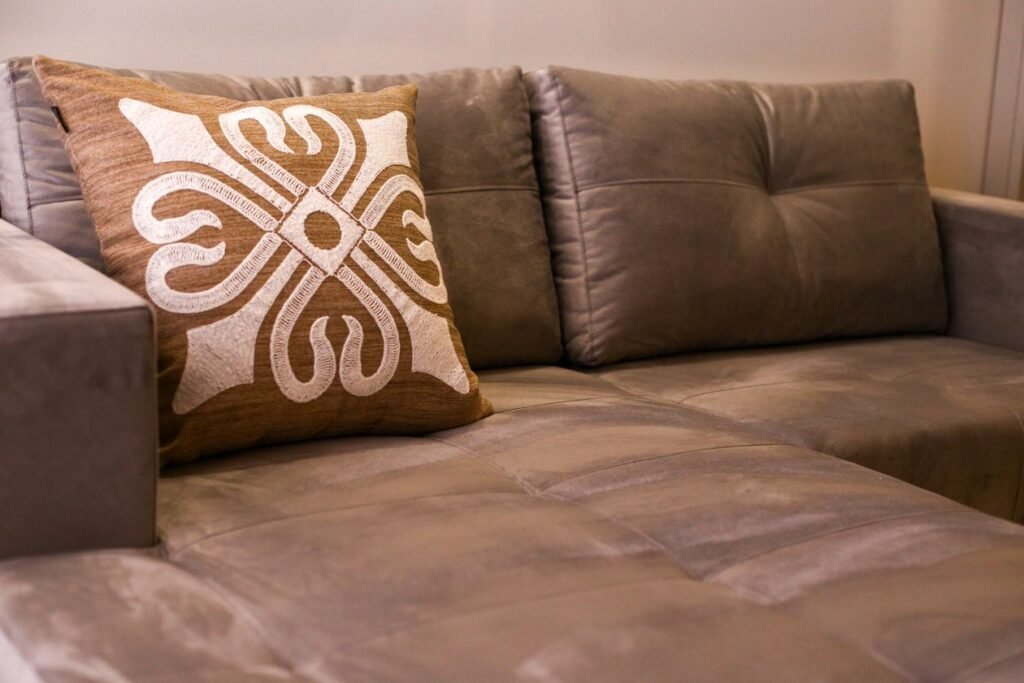
You do not need to replace furniture to change the feel of a room. Texture does most of the work, and the cheapest textures are the ones you swap rather than buy new. Replace polyester cushion covers with raw linen or organic cotton, swap plastic storage bins for woven seagrass baskets, and put a solid wood tray on the coffee table instead of a lacquered one. Each swap costs $10 to $35, and three swaps change the room more than one new piece of furniture.
Thrift stores are the best source for the big pieces. Vintage wooden tables, woven chairs, rattan side tables and solid wood accessories all carry the grain, patina and irregularity that new flat-pack furniture cannot fake, and they typically cost a third to a fifth of the new price. A solid wood coffee table that sells for $300 new is $40 to $80 secondhand; a rattan chair is $20 to $50. Check for wobble, smell and structural damage before buying, and pass on anything with a musty odour — it rarely leaves. The same thrift run usually turns up the baskets, trays and ceramic pots the plan needs, which is how the $200 budget stays under $200.
Does biophilic design only mean adding plants?
No. Plants are one element of fourteen in the framework. Natural materials, daylight, outdoor views, organic shapes, earthy colours and natural textures are equally important, and a room with one large plant, oak furniture, linen curtains and good daylight can be more biophilic than a room packed with greenery under artificial light.
The Five-Senses Checklist
Most budget guides stop at what a room looks like. Biophilic design works on five senses, and checking all five is what separates a room that photographs well from a room that actually feels different to sit in. Run through the list after the furniture is placed.
Sight: a view of something living from the main seat — a tree outside, a plant inside, or a landscape photograph if there is no view at all. Touch: at least three natural textures within arm’s reach of the seat — linen, wood, wool, jute, stone. Smell: a living herb on the kitchen windowsill, cedarwood or eucalyptus in a diffuser, or simply fresh air from an open window. Sound: the ambient sound of the outdoors through an open window, or a small tabletop fountain at $25 to $50 if the building is sealed. Taste: herbs grown on the windowsill — basil, rosemary or mint — which cost $3 to $5 per plant and connect the kitchen to the garden every time they are used. A room that scores on four of the five is doing the job; a room that scores on one is a plant display.
Common Mistakes That Make It Look Like a Plant Shop
Too many small plants, scattered everywhere. Ten tiny pots on ten different surfaces create visual noise. Group plants in odd numbers near light sources, vary the heights with wooden stools or stacked books, and let one large plant anchor the room. The rule of three works: one tall, one medium, one trailing, together.
Fake plants. Plastic greenery defeats the purpose. The research behind biophilic design is about living nature — growth, change, scent, texture. A fake plant adds none of those and, up close, subtracts from the real ones around it. One real pothos beats five fake ferns.
Ignoring the light the room actually has. Buying sun-loving plants for a north-facing room, or putting a fiddle-leaf fig three metres from the only window, guarantees a slow decline. Match the plant to the light, not the other way round, and use the table above as the starting point.
All green, no texture. A room full of plants on plastic shelves with synthetic cushions is a greenhouse, not a home. The plants need wood, linen, stone and woven fibre around them to read as part of a room rather than a collection. If the budget only stretches to one thing after the plants, spend it on a jute rug.
Forgetting the renters’ rules. None of this needs drilling, painting or permanent change. Plants sit in pots, rugs lie on floors, linen covers slip over cushions, and mirrors hang from adhesive hooks rated for the weight. The whole plan moves house in boxes, which is exactly what a rental version should do.
Biophilic Design in Every Room
The plan adapts room by room without new spending. In the bedroom, linen bedding is the single most effective change — natural linen has a warmth and lived-in texture that synthetic bedding cannot match — plus one low-light plant on the bedside table and a warm bulb after sunset. In the kitchen, a small herb garden on the windowsill and a wooden chopping board on the counter do more than a full redecoration. In the bathroom, humidity-loving plants like ferns and peace lilies thrive, and a wooden bath tray or stone soap dish adds the texture. In a home office, the desk goes by the window and a trailing pothos goes on the shelf above it — the same arrangement that keeps the workday calmer, for the price of a $12 plant.
For the bedroom version of this plan, with calm layers and a worked budget of its own, see Scandinavian Bedroom on a Budget: Calm Layers Under $250. For the layering and texture ideas that carry the same natural-material palette into a living room, see Layering Textures in a Living Room: A Practical Guide and Boho Bedroom Ideas: Layers, Texture & Warmth.
Start with the window, not the garden centre. Clear the light, move the seat, and let the room show you what it needs before spending anything. Then buy one large plant, one natural rug and two linen textures, and stop. A biophilic room is not finished when there is nothing left to add — it is finished when the room feels like the outdoors is part of it, and that takes a weekend and about $200, not a renovation.