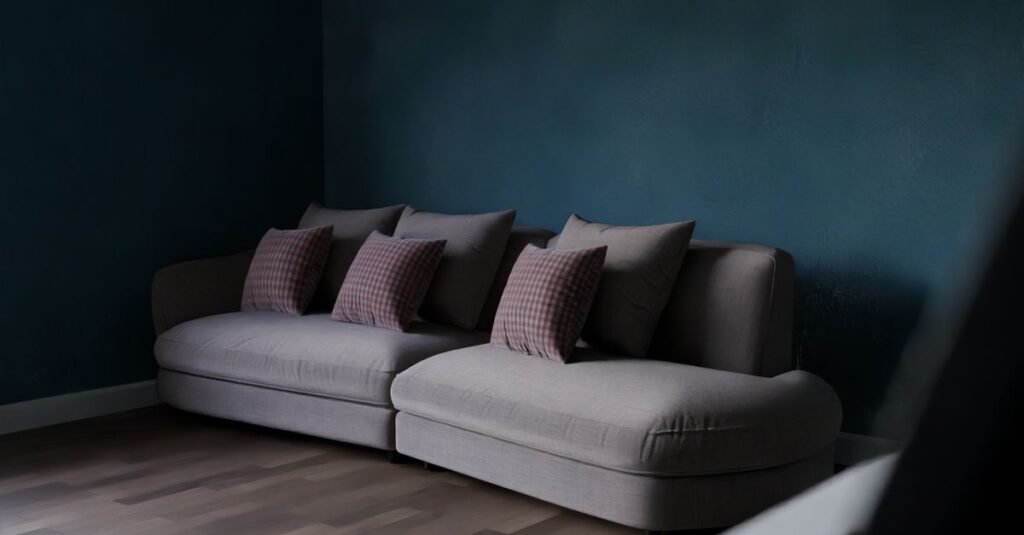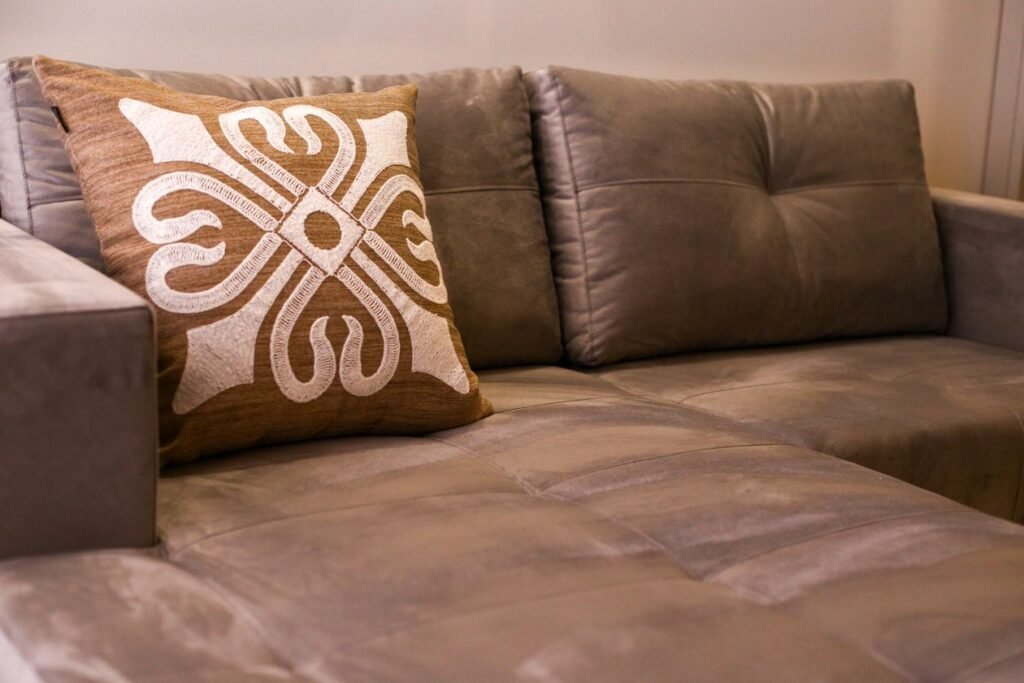

A sofa can be the right length, the right color, and the right price — and still feel wrong every time you sit down. The number that decides that feeling is seat depth, the distance from the front edge of the cushion to the back cushion. It is the measurement most shoppers never check, because it hides in the spec sheet behind the overall width and depth.
Seat depth decides whether your feet reach the floor, whether your back reaches the cushion, and whether you sit upright or slump. This guide gives you the standard numbers, a table matched to your height and sitting style, and a two-minute test you can run on any sofa in a showroom.
Seat Depth at a Glance: Find Your Range
| Your height | How you sit | Seat depth | Seat height |
|---|---|---|---|
| Under 5’4″ | Mostly upright | 19–21 in | 18–19 in |
| Under 5’4″ | Lounging, TV, naps | 20–22 in | 17.5–18.5 in |
| 5’4″ to 5’9″ | Mostly upright | 21–23 in | 18–19 in |
| 5’4″ to 5’9″ | Lounging, TV, naps | 22–24 in | 17–18.5 in |
| Over 5’9″ | Mostly upright | 21–23 in | 17–18 in |
| Over 5’9″ | Lounging, TV, naps | 23–25 in | 16.5–18 in |
The pattern is simple: shorter sitters and upright sitters need shallower seats, taller sitters and loungers need deeper ones. The standard range that suits most average-height adults is 21 to 24 inches. Anything from 25 to 28 inches counts as deep, and anything under 21 inches is shallow. Use the table as a starting point, then confirm with the sit test below — two people of the same height can prefer different depths, because leg length and sitting habits differ.
What Is Seat Depth, and How Is It Measured?
Seat depth is measured from the front edge of the seat cushion to the face of the back cushion, with the back cushion pressed into its normal position. It is not the same as overall sofa depth. A typical three-seat sofa runs 32 to 42 inches deep overall — that number includes the frame, the arms, and the thickness of the back — while the seat you actually sit on is only 21 to 24 inches of it. The overall depth decides whether the sofa fits the room; the seat depth decides whether it fits you.
Two details trip buyers up. First, manufacturers do not all measure seat depth the same way, so if a listing omits it or the number looks odd, ask the seller how it was measured before you order. Second, cushion compression changes the numbers: a soft down-wrapped seat can sink an inch or two when you sit, while a firm foam seat barely moves. Seat height is usually quoted to the top of an uncompressed cushion, so a soft sofa that lists 19 inches may sit at 17 or 18 inches once you are on it — which matters if you need an easy seat to rise from.
How to Find Your Number in 2 Minutes
The most reliable test needs no spec sheet at all. Sit all the way back on the sofa with your back flat against the back cushion and your feet flat on the floor. Your knees should sit roughly level with your hips, and there should be about a fist-width of space — roughly 2 inches — between the front edge of the seat and the back of your calves. If the cushion edge presses into the back of your knees, the seat is too deep for you. If your thighs hang unsupported past the edge, it is too shallow.
For a number you can take shopping, measure your own thigh: sit on a hard chair pushed against a wall, all the way back, and measure from the wall to the crease behind your knee. Subtract 2 inches, and the result is roughly the seat depth that holds you upright with your back on the cushion. Then test the real sofa for at least ten minutes, in the position you actually use at home — upright with a book, or curled up with your feet tucked — because a seat that feels fine for thirty seconds can feel wrong by minute ten.
Can a short person use a deep sofa? Yes, with help: two or three firm back cushions shorten the effective depth by several inches, so a 25-inch seat can work for someone who needs 21 inches. It is a workable fix for a shared household sofa, but if the sofa is only for one short sitter, buying the right depth outright is the better choice.
Is seat depth the same as sofa depth? No. Overall sofa depth runs 32 to 42 inches on a standard three-seater and includes the frame and back; seat depth is the 21 to 24 inches your body actually uses. A deep-looking sofa can have a standard seat, and a slim-looking sofa can have a deep one, so check both numbers.
What if two people in the house need different depths? Aim for the middle ground — 22 to 23 inches — and let the shorter person use a firm back cushion to shorten it. For a household with a big height gap, a modular sofa with different seat depths per section, or two different chairs instead of one sofa, solves the argument permanently.
Deep, Standard, or Shallow: Who Each Suits
Shallow seats of 19 to 21 inches suit petite sitters, upright sitters, and anyone who needs an easy seat to stand up from — older relatives included. They keep feet flat and knees bent at a right angle, which is also why formal sitting rooms and waiting areas tend to use them. The trade-off is that they are poor for curling up: there is nowhere to tuck a leg.
Standard seats of 21 to 24 inches suit most average-height adults for everyday sitting, conversation, and reading. This is the range nearly every mainstream sofa is built around, and it is the safest choice when the sofa has to serve a whole household. If you are buying one sofa for a mixed-height family and you do not want to overthink it, 22 to 23 inches is the middle of the range and the most forgiving number in it.
Deep seats of 25 to 28 inches suit tall sitters, loungers, and anyone who treats the sofa as a second bed for naps and movie nights. They feel luxurious because they let you tuck a leg up or stretch out, but they are a poor choice as an only sofa for short sitters, whose feet will dangle without back pillows. Expect to pay roughly $100 to $300 more for a deep-seat version of the same frame — the extra material costs real money. As a budgeting guide, a decent budget sofa runs $400 to $800, a solid mid-range sofa $900 to $1,800, and a deep-seat sectional $1,200 to $2,500.
The Room Math: Depth Comes Out of Your Floor Space
Seat depth is about your body, but overall depth is about your room — and the two are linked. A 44-inch-deep sofa against one wall of a 12-foot room leaves 100 inches before the coffee table and the walkway, and once you subtract the 14- to 18-inch sofa-to-coffee-table gap and a 30- to 36-inch walkway, there is not much room left for anything else. In a small living room, look for apartment sofas of 33 to 36 inches overall depth with a 21- to 23-inch seat: you keep the comfortable seat and give the room back 6 to 8 inches of floor.
Length matters too. The two-thirds rule says a sofa looks right when it fills about two-thirds of the wall behind it — a 12-foot wall points to a 96-inch sofa, a 10-foot wall to about 80 inches. Check the full set of numbers together before ordering: overall width and depth, seat depth and height, and the clearances around it. Our sofa to coffee table distance guide covers the spacing in detail, and our living room conversation area layout shows how the sofa, chairs, and table sit together at the right distances.
Key Takeaways
Key takeaways:
- Standard seat depth is 21 to 24 inches; deep is 25 to 28 inches, shallow is 19 to 21 inches.
- Match depth to your height and habits: under 5’4″ usually wants 19 to 22 inches, over 5’9″ usually wants 23 to 25 inches for lounging.
- Run the sit test: back flat, feet flat, knees level with hips, a fist-width (about 2 inches) between the seat edge and your calves.
- Seat depth is not sofa depth — check both, and remember soft cushions sink an inch or two when you sit.
- For a mixed-height household, 22 to 23 inches is the most forgiving middle ground, with back cushions for the shorter sitter.
The right seat depth is the one you stop noticing. Sit on the sofa for ten minutes in your real position, check the fist-width gap behind your calves, and trust what your body tells you over the spec sheet. A sofa that fits your body gets used every day; one that does not becomes the expensive piece of furniture everyone avoids.