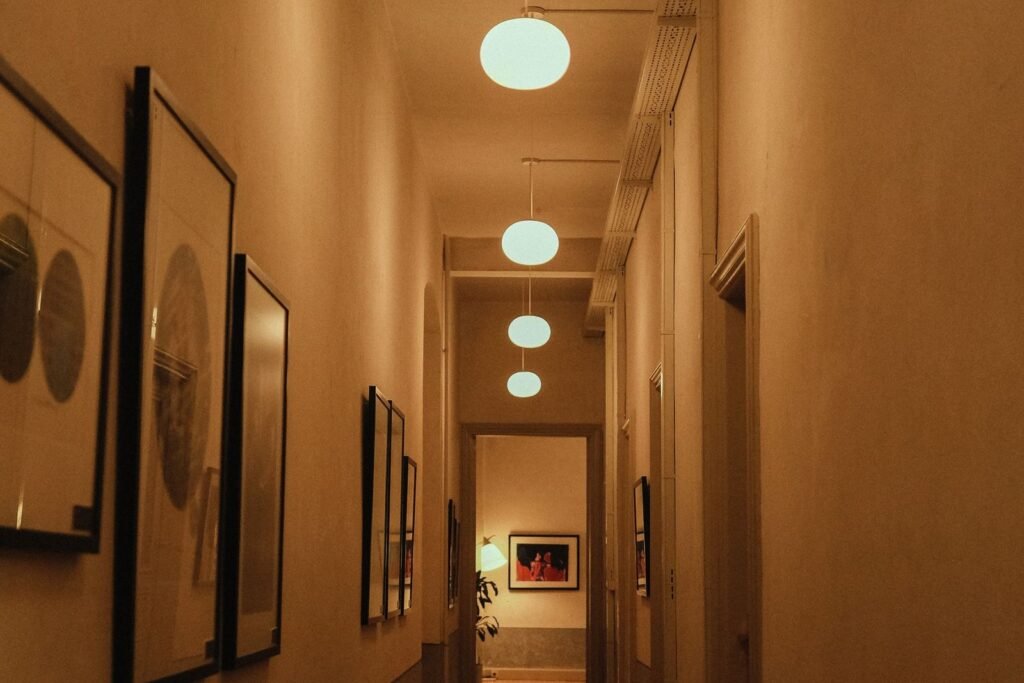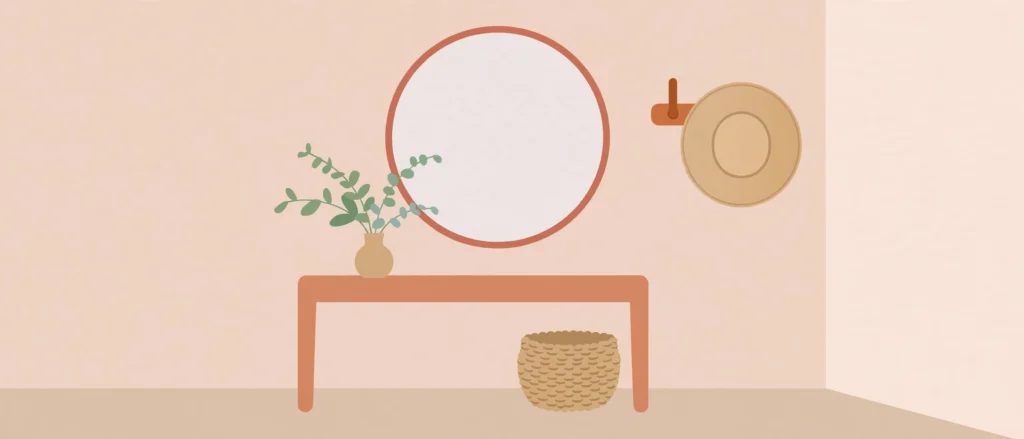
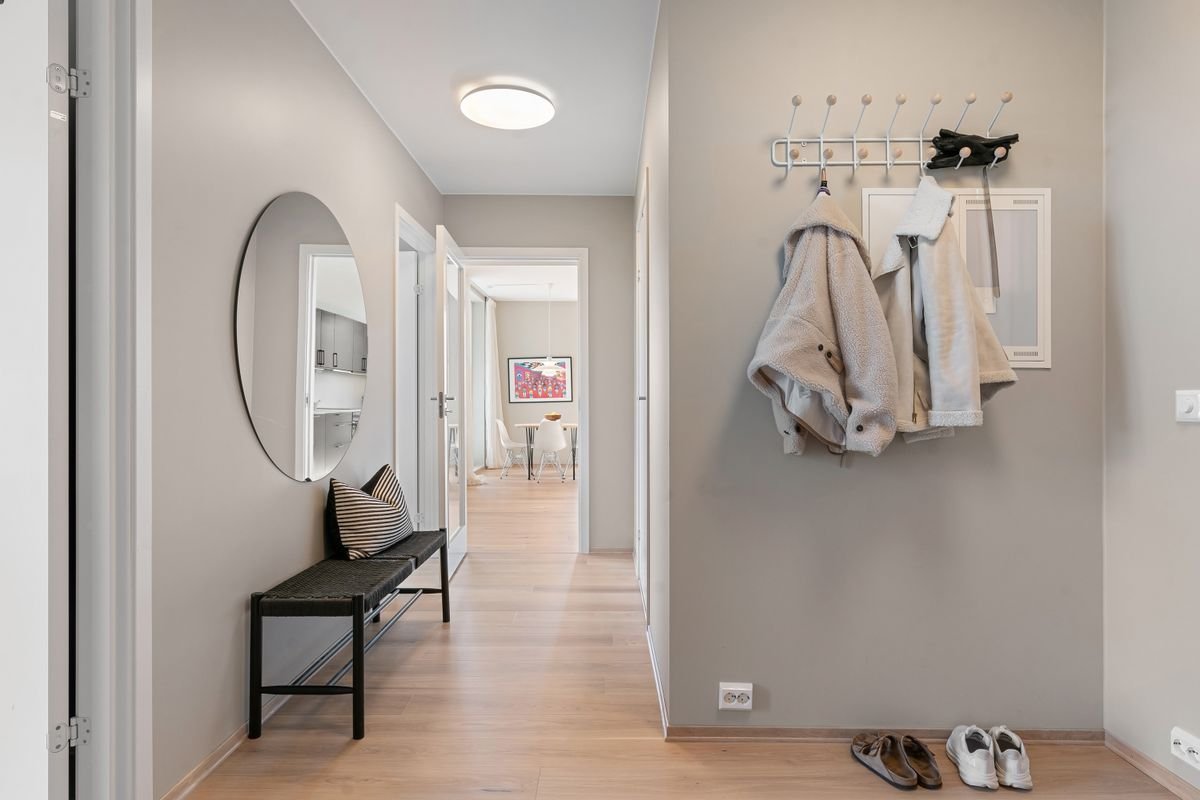
Entryway storage capacity is the question almost nobody measures and almost everybody gets wrong. The entryway is the smallest working space in the home, yet it has to absorb everything that comes through the front door: shoes, coats, bags, keys, umbrellas, post, and the things carried in on a wet day. Guess too small and the floor becomes a pile within a week; guess too big and the hallway becomes a corridor of cupboards with no room to walk. This guide sizes entryway storage from a count of what the household actually owns, with the depths, heights and widths that make the numbers work, and a full setup under $200.
| Household | Wall width needed | Shoes at the door | Coats on hooks | Bags and keys |
|---|---|---|---|---|
| 1 person | 24 inches | 4 to 6 pairs | 2 to 3 | 1 bag, 1 key tray |
| 2 people | 36 inches | 8 to 10 pairs | 4 to 6 | 2 bags, 1 key tray |
| 3 people | 48 inches | 10 to 12 pairs | 6 to 8 | 2 to 3 bags, 1 key shelf |
| 4 people | 48 to 60 inches | 12 to 16 pairs | 8 to 10 | 3 to 4 bags, 1 key shelf |
The table above is the short answer, and the rest of this guide is how the numbers are reached. Every figure in it comes from the same method: count what the household actually brings through the door, allow one place for each thing, and size the furniture to the count rather than the other way round.
How Much Entryway Storage Does One Person Actually Need?
A single person needs less storage than the furniture shops suggest and more than a single hook provides. The daily load is four to six pairs of shoes in active rotation — the everyday pair, a work pair, trainers, and one or two seasonal pairs — plus two to three coats, one bag, keys, and somewhere for post and the umbrella. That fits on 24 inches of wall: a slim shoe cabinet 24 inches wide, a rail with three hooks above it, and a small tray for keys. The footprint is 24 inches of wall by 8 to 10 inches of floor, which leaves a full walkway in all but the narrowest hall.
The mistake single-person households make is buying a full hall tree built for a family, which swallows the hallway, or buying nothing and letting the floor do the job. The middle option is a system with one job per piece: the cabinet takes the shoes, the hooks take the coats, the tray takes the keys. The pair worn today does not belong in the cabinet at all; it belongs on a boot tray by the door, ready to step into, because a pair that has to be fetched from a cupboard every morning will be left on the floor instead.
The Count-First Capacity Formula
The method behind the table is simple enough to do in an evening, and it is the original angle of this guide: count first, buy second. For seven days, note everything that comes through the front door and does not go straight to its proper room. Count the pairs of shoes worn, the coats hung, the bags carried, the umbrellas opened, and the pieces of post dropped on the nearest surface. At the end of the week, the count is the brief: it is what the entryway actually has to hold, not what a catalogue assumes it holds.
Then apply the sizing rules. Each adult pair of shoes needs 10 to 12 inches of shelf width on a flat shelf, so a 24-inch shelf holds two pairs and a 36-inch shelf holds three. Each coat needs one hook, spaced 6 to 8 inches from the next, so four coats need a rail of at least 24 to 32 inches. Each active bag needs one open cubby or one strong hook. Tall boots need 16 to 20 inches of clear vertical space, measured from the actual boot. Add up the widths and the wall length is decided by the count: a household with 12 pairs needs 60 to 72 inches of combined shelf width, and that number tells the buyer exactly which cabinet to look for.
The second half of the formula is the overflow rule: the entryway holds the daily rotation only. Everything else — the second seasonal coat, the shoes worn once a month, the spare umbrella — lives in a closet, under a bed or on a high shelf, and rotates in when the season changes. An entryway sized for everything the household owns is too big to walk through; one sized for the daily count stays tidy because everything in it is used every day.
Shoe Storage: Depth, Width and the Two-Pair Rule
Shoes are the biggest volume problem in the entryway, and depth is the number that matters most. A tilt-out shoe cabinet is 8 to 10 inches deep, because the shoes sit at an angle. A standard shoe cabinet with flat shelves is 12 to 14 inches deep, the deepest piece that still leaves a real walkway in a normal hallway. A coat cabinet with a hanging rail needs 22 to 24 inches of depth, which is why a full coat cupboard belongs in a square foyer, not a narrow corridor. Spend the shallowest depth that holds the shoes: tilt-out for a narrow hall, flat shelves where 12 inches can be spared.
Width is the second number. A 24-inch cabinet with three shelves holds six pairs of adult shoes; a 36-inch cabinet holds nine to twelve. Children’s shoes take roughly 8 inches per pair, so a family shelf stretches further than the same shelf in an adult household. Adjustable shelves matter more than the cabinet itself: fixed shelves at even intervals waste the space above low shoes, while shelves that move in one-inch steps let each gap match its contents, with a taller section for boots.
The two-pair rule keeps the system honest. Two pairs per person stay at the door — the pair worn today and the pair worn yesterday, on the boot tray. Every other pair goes in the cabinet. Ventilation closes the loop: slatted shelves, a gap at the back of each shelf, or a small vent in the cabinet door keeps air moving and stops the damp-shoe smell. Wet shoes should dry on the tray before they go into a closed cabinet at all.
Coats, Bags and Keys: Heights That Work
Coat hooks belong at 60 to 66 inches from the floor for adults, with a second row at 40 to 48 inches for children — low enough for a child to reach, high enough that a hung coat does not sweep the bench below. Space the hooks 6 to 8 inches apart for light jackets, and further apart for bulky winter coats, which need room to hang without staying damp. One hook per person plus one guest hook is the working number; a rail with six hooks serves a family of four with room for a visitor.
The bench goes under the hooks: 17 to 19 inches high and 14 to 18 inches deep, low enough to sit on while changing shoes and shallow enough to keep the walkway clear. A bench with drawers or baskets underneath doubles as shoe storage, but it needs the extra depth, so it suits a square foyer better than a corridor. For the sizing in detail, see Entryway Bench Size Guide: Height, Depth & Clearance.
Keys and small items need a home at 48 to 54 inches high, where the hand naturally lands on the way in: a shelf 4 to 6 inches deep with a tray about 6 by 9 inches holds keys, a wallet and the day’s post. A mirror above the key shelf, centred at 57 to 60 inches, gives the last look before leaving without taking extra wall space, and a round mirror suits a narrow hall because it softens the rectangle of the space. For mirror sizes and placement, see Entryway Mirror Ideas: Placement, Size & Style Guide. The mat underneath should be 24 by 36 inches, low pile under half an inch so the door clears it.
What If the Hallway Is Only 36 Inches Wide?
A 36-inch hallway is the hard case, and the most common one in apartments. The arithmetic is unforgiving: 12 inches of storage leaves a 24-inch walkway, a squeeze with a bag in hand; 8 inches leaves 28 inches, which is workable; and a hallway under 32 inches wide leaves no room for floor furniture at all. Measure first, using the subtraction that decides everything: available storage depth equals hallway width minus the walkway to keep, and the walkway to keep is 30 inches at minimum, 36 inches where two people come home at once.
In a hallway too narrow for floor pieces, the storage goes on the wall and above the floor: a wall-hung shoe cabinet with a gap underneath, which keeps the floor visible and the shoes out of the walkway; hooks on the wall behind the opened front door, which is dead space in most entries; a shallow shelf above the shoe cabinet for hats and gloves; and an over-door rack on the inside of a closet door, if one is within reach of the entrance. The door swing is the check that must be done first — nothing on the floor inside the arc of the front door, which is 30 to 36 inches from the hinge, and nothing on the wall where the handle strikes. Mark the arc on the floor with tape, walk through it with a bag and a coat on, and the plan either works or it does not, before anything is bought.
Renter-Friendly Entryway Storage: No Drilling Needed
Renters need the same system without holes in the wall, and the no-drill version of every piece exists. A freestanding slim shoe cabinet, 8 to 10 inches deep, holds the same six to nine pairs as the wall-hung version. An over-door hook rack hangs on the front door or a closet door and carries four to six coats without a single screw. A leaning ladder shelf, a narrow console table, or a bench with a tray on top gives the key shelf and the drop zone without a fixing. Command strips rated for the load hold a small key shelf and a lightweight mirror, and a tension rod inside a shallow alcove makes a hanging rail for coats.
The budget is the same as the owned-home version, and the pieces move with the renter, which is the point: a shoe cabinet, a hook rail, a bench and a tray are furniture, not fixtures, chosen to fit the next hallway as well as this one. Avoid adhesive hooks for anything heavier than a single key ring — they fail on textured paint and take the paint with them — and keep the heaviest piece, the shoe cabinet, on the floor. A renter’s entryway done well looks identical to an owner’s; the only difference is that it leaves no trace when the lease ends.
The Seasonal Swap: Where Off-Season Gear Lives
Every entryway has a season, and the swap is what keeps the count honest. Twice a year, in spring and autumn, the entryway changes over: winter coats, heavy boots and scarves move to the back of a closet or a high shelf, and the light jackets, trainers and rain gear move to the door. The swap takes twenty minutes and a single rule — nothing stays at the door that will not be worn in the next two weeks — and it is the difference between an entryway that works all year and one that is overwhelmed for six months and empty for the other six.
Storage for the off-season gear should be close but not in the way: a labelled box on top of a wardrobe, a vacuum bag under the bed, or a high shelf in a hallway cupboard. The box is labelled by season, not by contents, so the swap is one box out and one box in. Children’s gear swaps more often, because children grow out of coats between seasons, and the outgrown items should leave the house in the same session — to a younger sibling or a donation bag — rather than returning to the entryway out of habit.
What a Full Entryway Setup Costs
A complete entryway setup is a cheap project, because the expensive part is the measuring, not the shopping. The table below uses typical prices for a two-person household on a 36-inch wall, with mid-range picks throughout.
| Item | What it does | Typical cost |
|---|---|---|
| Slim shoe cabinet, 36 inches | Holds 9 to 12 pairs on three shelves | $70 |
| Hook rail, 5 to 6 hooks | Coats for two people plus a guest | $18 |
| Bench or stool, 17 to 19 inches high | Seat for changing shoes, storage underneath | $48 |
| Boot tray | Wet shoes, two pairs, by the door | $10 |
| Key shelf with tray | Keys, wallet and post at 48 to 54 inches | $12 |
| Mirror | Last look before leaving, centred at 57 to 60 inches | $22 |
| Total | Full setup for two people | $180 |
How much space does entryway storage need?
Less depth than most people assume. A tilt-out shoe cabinet needs 8 to 10 inches of depth, a standard shoe cabinet 12 to 14 inches, and a bench 14 to 18 inches. The wall width depends on the household: 24 inches for one person, 36 inches for two, and 48 to 60 inches for a family of four.
How many pairs of shoes should an entryway hold?
Two pairs per person at the door, on a boot tray, and the rest of the daily rotation in the cabinet — 4 to 6 pairs for one person, 8 to 10 for two people, and 12 to 16 for a family of four. Off-season and rarely worn shoes belong in a closet or under a bed.
How deep should entryway shoe storage be?
8 to 10 inches for a tilt-out cabinet, where shoes sit at an angle, and 12 to 14 inches for a standard cabinet with flat shelves. Deeper than 14 inches eats into the walkway, which should stay at least 30 inches clear, and 36 inches where two people come home at once.
What height should entryway hooks and benches be?
Coat hooks at 60 to 66 inches for adults and 40 to 48 inches for children, spaced 6 to 8 inches apart. A bench seat at 17 to 19 inches high, and a key shelf at 48 to 54 inches with a tray about 6 by 9 inches for keys, a wallet and post.
Entryway storage is a counting problem, not a shopping problem. Count what comes through the door for a week, size the shelves, hooks and bench to that count, keep the walkway at 30 inches or more, and let the off-season gear live elsewhere. Do that and the entryway holds everything the household uses every day, on one wall, for under $200, and the floor stays clear for the people walking through it.