Decorating a Living Room with a Corner Fireplace and TV
A living room should feel welcoming, comfortable, and visually balanced. However, achieving that balance becomes more challenging when the room includes both a corner fireplace and a television. Each feature naturally attracts attention, making it difficult to decide where furniture should face and how the overall layout should flow.
Many homeowners struggle with awkward furniture placement, blocked walkways, empty corners, or a room that feels disconnected. Fortunately, these challenges can be solved with thoughtful planning rather than expensive renovations. By understanding how both focal points interact, it becomes much easier to create a space that is practical for everyday living while still looking polished.
This guide explains everything needed to decorate a living room with a corner fireplace and TV. From choosing the best furniture arrangement to selecting colors, lighting, and decorative accessories, every section is designed to help readers create a room that feels cohesive, stylish, and functional regardless of its size or design style.
TV Viewing Distance & Mounting Math
Getting the viewing distance right makes a noticeable difference to comfort. As a general rule of thumb for 1080p screens, a widely used guideline is to sit about 1.5 to 2.5 times the screen diagonal away — a 55-inch TV, for example, works well at roughly 7 to 11.5 feet. With a 4K screen, viewers can usually sit a little closer, around 1 to 1.5 times the diagonal, because the higher pixel density stays sharp at shorter distances.
Mounting height matters just as much. Aim to position the screen so its centre sits at seated eye level — around 42 inches from the floor for a standard sofa — to avoid neck strain during longer viewing sessions.
Corner setups add one more consideration. A full-motion mount lets the TV be pulled away from the wall and angled toward the seating area, which is especially handy when the screen sits on an angled wall. Leave about 4 to 6 inches of ventilation space behind the TV so heat can escape.
Treat these figures as general guidelines rather than exact prescriptions — the ideal setup also depends on the seating layout, screen resolution, and personal comfort.
Why Decorating Around a Corner Fireplace and TV Is Challenging
Unlike a fireplace located in the center of a wall, a corner fireplace changes the natural geometry of a room. The angled placement creates an unexpected focal point, which can make furniture arrangements feel less intuitive.
Adding a television introduces another visual anchor. Without a clear strategy, these two elements may compete instead of complementing each other.
Common decorating challenges include:
- Two competing focal points
- Limited wall space
- Awkward furniture placement
- Difficult traffic flow
- Unbalanced room proportions
- Limited locations for artwork and shelving
- Uneven lighting distribution
Rather than viewing these as limitations, they can become opportunities to design a living room with more character and personality.
Benefits of a Corner Fireplace
Although decorating around one requires additional planning, a corner fireplace offers several advantages.
Creates More Wall Space
Since the fireplace occupies a corner instead of the center wall, larger uninterrupted walls remain available for entertainment units, bookshelves, artwork, or storage cabinets.
Makes Small Rooms Feel Larger
Corner fireplaces often consume less visual space than traditional centered fireplaces, helping compact living rooms appear more open.
Adds Architectural Interest
An angled fireplace naturally creates depth within a room. Instead of feeling flat, the space gains dimension that can be enhanced through thoughtful furniture placement.
Offers Flexible Furniture Arrangements
Because seating does not always have to face one central wall, homeowners have greater flexibility when creating conversation areas or multifunctional spaces.
Understanding Your Living Room Before Decorating
Successful decorating starts with understanding how the room functions rather than immediately purchasing furniture or accessories.
Before moving any furniture, evaluate several important factors.
Measure the Space
Accurate measurements help avoid costly mistakes.
Record:
- Overall room dimensions
- Ceiling height
- Fireplace dimensions
- TV size
- Window locations
- Door openings
- Traffic pathways
Even a simple floor sketch can reveal better layout possibilities.
Identify Natural Walkways
People should move comfortably through the room without weaving around furniture.
Designers generally recommend maintaining clear walking paths throughout the space. Comfortable circulation makes a room feel larger and more inviting.
Observe Natural Light
Sunlight changes throughout the day.
Pay attention to:
- Morning light
- Afternoon glare
- Window reflections
- Fireplace visibility
- TV screen reflections
This information helps determine the ideal location for seating and television placement.
Choosing the Primary Focal Point
One of the biggest decorating mistakes is allowing both the fireplace and television to compete equally for attention.
Instead, determine which feature should dominate the room.
Option 1: The Fireplace as the Main Focal Point
This approach works particularly well when:
- The fireplace features beautiful stone or brickwork.
- The mantel serves as a decorative centerpiece.
- Family gatherings emphasize conversation.
- Television viewing is secondary.
Furniture should gently angle toward the fireplace while still allowing comfortable TV viewing.
Option 2: The Television as the Primary Focal Point
Households that frequently enjoy movies, sports, or gaming may prefer arranging seating around the television.
In this situation, decorative elements can visually connect the fireplace so it remains an integrated feature instead of appearing isolated.
Option 3: Balance Both Features
Many modern homes successfully give equal importance to both.
This can be achieved by:
- Using sectional sofas positioned diagonally.
- Installing swivel chairs.
- Selecting symmetrical furniture.
- Maintaining equal visual weight throughout the room.
The result is a balanced space where neither element overwhelms the other.
Best Furniture Placement Principles
Furniture should encourage conversation while preserving clear sightlines.
Several design principles consistently produce attractive living room layouts.
Float Furniture Away from Walls
One common misconception is that every sofa should touch a wall.
Floating furniture often creates:
- Better conversation areas
- Improved traffic flow
- Greater visual balance
- More professional-looking interiors
Even moving a sofa several inches away from the wall can dramatically improve the room.
Create a Conversation Zone
Arrange seating so people can comfortably communicate without raising their voices.
A balanced arrangement might include:
- One sofa
- Two accent chairs
- A coffee table
- One or two side tables
The fireplace naturally enhances this gathering area by adding warmth and visual interest.
Maintain Proper Viewing Distance
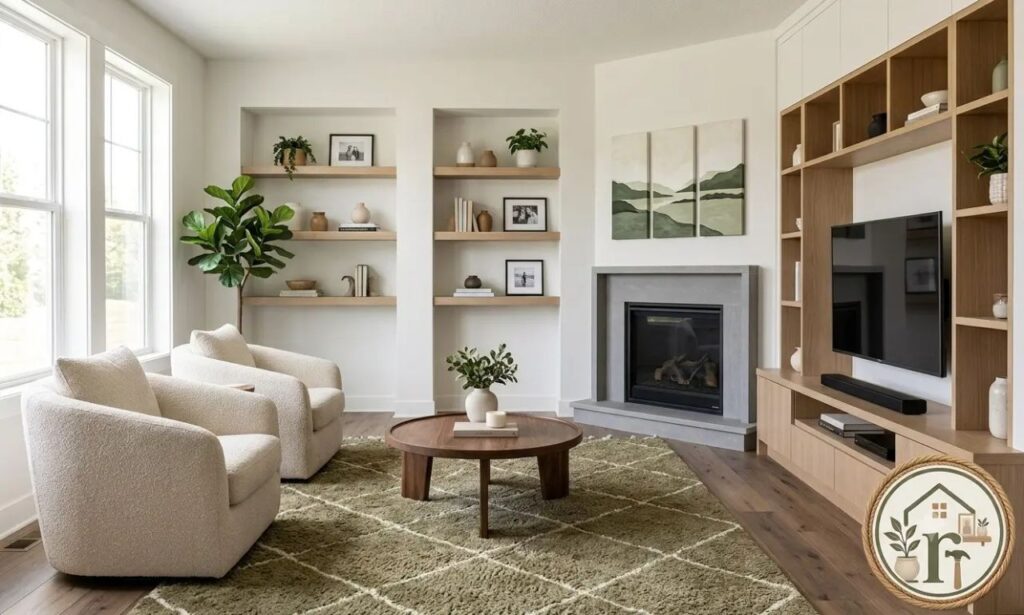
The distance between the television and seating should match the TV’s size for comfortable viewing.
Oversized televisions placed too close can cause eye strain, while seating positioned too far away reduces viewing enjoyment.
Leave Adequate Walking Space
Furniture should define spaces without obstructing movement.
Maintain open pathways between:
- Entry points
- Hallways
- Windows
- Fireplace
- Entertainment area
Rooms that feel easy to navigate almost always appear more spacious.
Best Living Room Layout Ideas
The ideal arrangement depends on the room’s size, shape, and daily use. The following layouts consistently work well with a corner fireplace and TV.
1. The L-Shaped Layout
This layout is one of the most effective for balancing both focal points.
Best for:
- Medium-sized living rooms
- Open-concept homes
- Families who entertain frequently
Place a sectional sofa opposite the TV while allowing one side to face the fireplace. This arrangement creates comfortable viewing angles and preserves conversation flow without making either feature feel neglected.
2. Symmetrical Layout
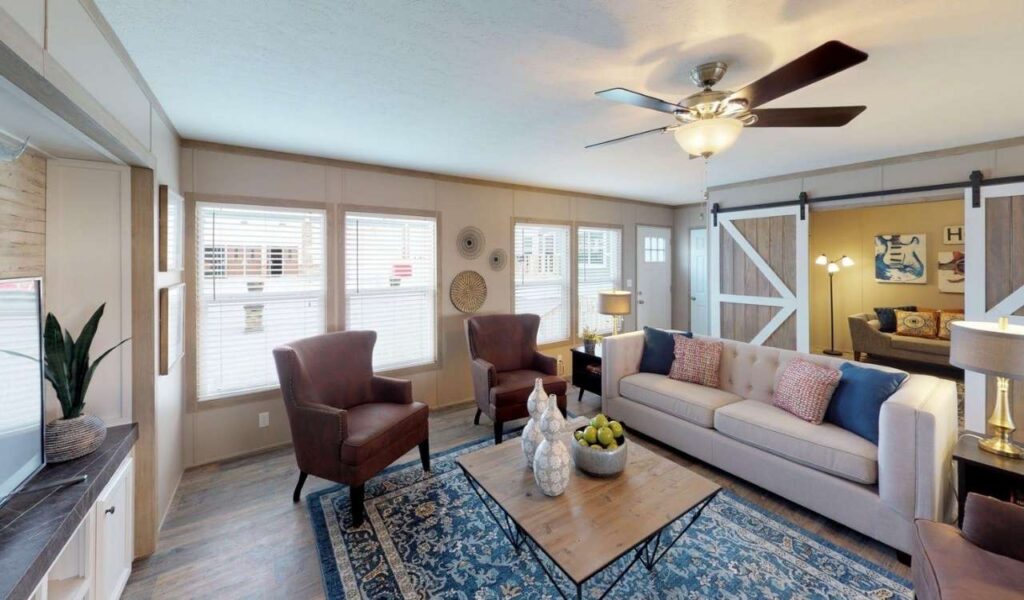
A symmetrical arrangement creates a polished and timeless appearance. Position the sofa opposite the TV and place matching accent chairs on either side. A rectangular coffee table anchors the seating area, while matching side tables and lamps complete the balanced look.
Best for:
- Traditional homes
- Formal living rooms
- Medium to large spaces
Why it works:
Symmetry reduces visual clutter and allows both the corner fireplace and TV to share attention without overwhelming the room.
3. Floating Furniture Layout
Instead of placing every piece against the walls, float the main seating area toward the center of the room.
This layout often includes:
- A sofa positioned away from the wall
- Two accent chairs facing the sofa
- A large area rug defining the conversation zone
- A console table behind the sofa for additional storage and décor
Floating furniture creates better traffic flow while making the room feel professionally designed.
4. Sectional Sofa Layout
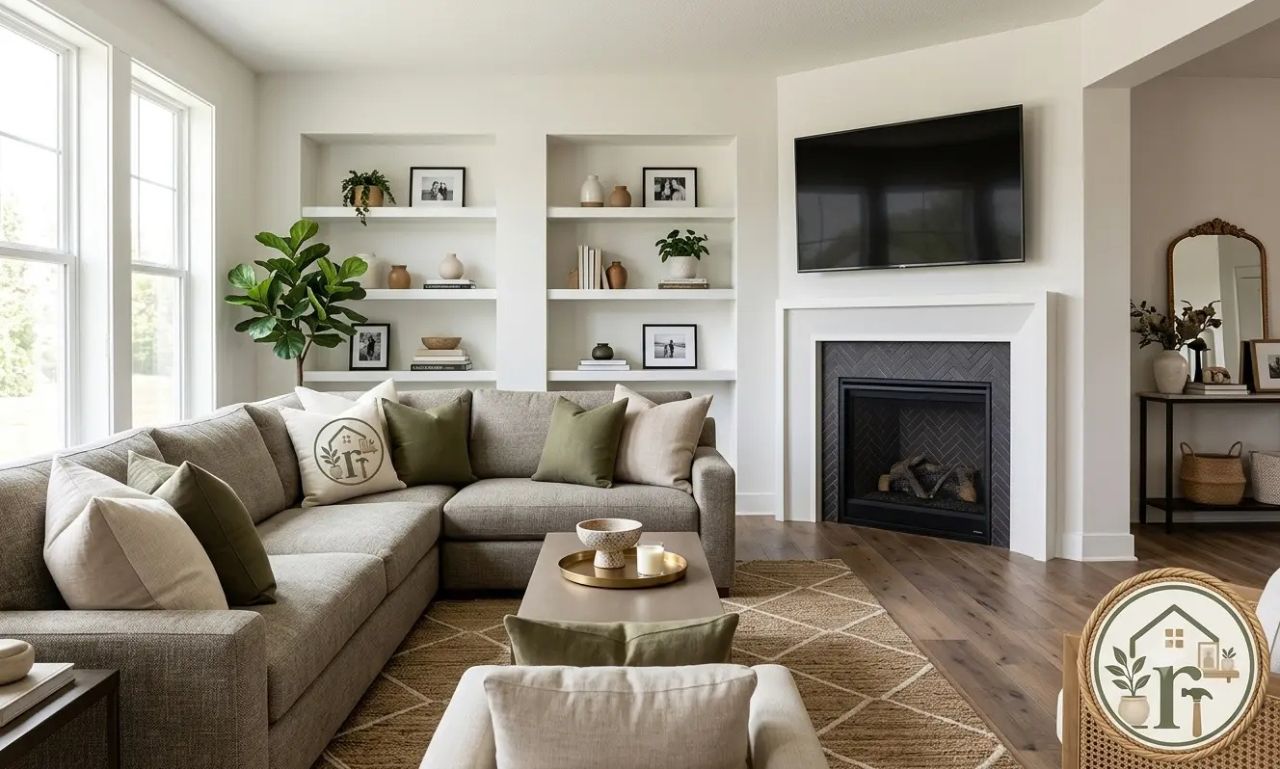
A sectional sofa naturally wraps around the living area and works exceptionally well with a corner fireplace.
Ideal for:
- Families
- Movie nights
- Open-concept homes
- Large living rooms
Choose a sectional that allows one section to face the TV while the other gently angles toward the fireplace. This arrangement gives everyone a comfortable viewing angle without ignoring the fireplace.
5. Conversation-First Layout
Not every living room revolves around television viewing.
In this arrangement:
- The fireplace becomes the primary focal point.
- Seating faces one another to encourage conversation.
- The TV remains visible but secondary.
This layout works particularly well for homeowners who enjoy entertaining guests.
Decorating Around a Corner Fireplace
A corner fireplace already provides architectural character, so decorating around it should enhance its appearance instead of competing with it.
Keep the Surround Simple
Avoid filling every available space with decorative items. A few carefully chosen accessories often create a stronger visual impact than multiple small pieces.
Consider decorating with:
- Tall ceramic vases
- Sculptural objects
- Decorative lanterns
- Green plants
- Framed artwork
- Stacked coffee table books
Leaving some empty space helps the fireplace remain the room’s focal feature.
Highlight the Fireplace Materials
Whether the fireplace features brick, stone, tile, or painted drywall, allow the existing material to shine.
Natural finishes pair well with:
- Warm wood furniture
- Neutral textiles
- Soft lighting
- Organic decorative accents
If the fireplace feels outdated, painting the surround or updating the mantel can instantly modernize the space.
Decorate the Hearth Thoughtfully
If the fireplace includes a raised hearth, use it carefully.
Suitable decorations include:
- Woven baskets
- Decorative lanterns
- Fireplace tools
- Oversized candles
- Seasonal greenery
Avoid overcrowding the hearth, especially if the fireplace is frequently used.
Should the TV Go Above the Fireplace?
Many homeowners ask whether the television should be mounted above the fireplace.
The answer depends on several factors.
Advantages
- Saves valuable wall space.
- Creates a clean, streamlined appearance.
- Keeps both focal points together.
- Works well in smaller living rooms.
Potential Drawbacks
- The TV may be mounted too high for comfortable viewing.
- Heat from the fireplace may affect electronics.
- Neck strain can occur during extended viewing sessions.
- Decorative flexibility becomes more limited.
When possible, mounting the television on an adjacent wall often provides a more comfortable viewing experience while allowing the fireplace to remain a distinct design feature.
Alternative TV Placement Ideas
If placing the television above the fireplace isn’t practical, several other options work beautifully.
Adjacent Wall
Mounting the TV on the wall next to the fireplace creates a balanced layout while maintaining clear sightlines.
Built-In Cabinet
Custom built-ins surrounding one wall provide storage, display shelving, and an integrated entertainment center.
Benefits include:
- Hidden cable management
- Additional storage
- Display space for décor
- A custom, high-end appearance
Swivel TV Mount
A full-motion mount allows the television to rotate toward different seating areas, making it easier to accommodate both the fireplace and the TV.
Styling the TV Wall
A television doesn’t have to dominate the room.
Several design techniques help it blend into the décor.
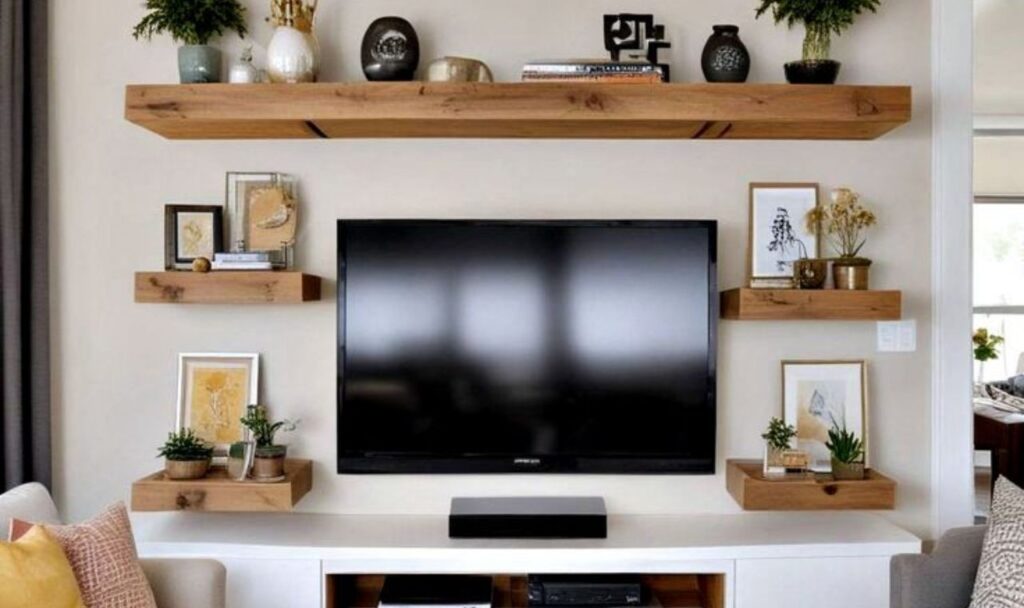
Add Floating Shelves
Floating shelves create visual balance around the TV.
Display items such as:
- Books
- Plants
- Framed photographs
- Decorative bowls
- Sculptures
- Candles
Keep displays uncluttered by varying object heights and leaving negative space.
Create a Gallery Wall
A gallery wall can make the television feel like part of a larger design.
Mix:
- Framed artwork
- Family photographs
- Mirrors
- Small shelves
- Decorative objects
Using similar frame colors helps maintain a cohesive appearance.
Hide the TV
Some homeowners prefer the television to disappear when not in use.
Creative solutions include:
- Sliding barn doors
- Cabinet doors
- Motorized lifts
- Frame-style televisions that display artwork
- Built-in wall panels
Color Schemes That Create Balance
Choosing the right colors helps unify the fireplace, television, furniture, and décor.
Neutral Color Palette
Neutral tones remain one of the most versatile choices.
Popular combinations include:
- White
- Cream
- Beige
- Taupe
- Soft gray
- Warm greige
These colors make living rooms feel brighter, larger, and more timeless.
Warm Earth Tones
Earth-inspired colors complement natural fireplace materials beautifully.
Examples include:
- Terracotta
- Olive green
- Camel
- Rust
- Warm brown
- Sand
These shades create a cozy atmosphere that works especially well during colder months.
Modern Monochromatic Design
A monochromatic palette creates a sophisticated appearance.
Combine different shades of:
- Gray
- Charcoal
- White
- Black
Texture becomes especially important when using a limited color palette. Mix fabrics, wood, stone, and metal to add depth.
Add Accent Colors
Accent colors introduce personality without overwhelming the space.
Popular options include:
- Navy blue
- Forest green
- Mustard yellow
- Emerald
- Burnt orange
- Burgundy
These colors can appear through pillows, artwork, rugs, or decorative accessories.
Lighting Ideas for a Cozy Living Room
Lighting dramatically influences how a living room feels, particularly in the evening when the fireplace becomes more prominent.
Layer Lighting
Interior designers recommend combining several light sources rather than relying on a single ceiling fixture.
Include:
- Ambient lighting
- Task lighting
- Accent lighting
Layered lighting makes the room feel warmer and more inviting.
Floor Lamps
Floor lamps work well beside sofas or reading chairs.
Benefits include:
- Additional reading light
- Visual height
- Decorative interest
- Flexible placement
Table Lamps
Matching table lamps create symmetry while adding soft illumination.
Warm white bulbs generally produce the most comfortable atmosphere for living rooms.
Wall Sconces
Wall sconces draw attention to architectural details while freeing up table space.
Install them:
- Beside artwork
- Around the fireplace
- Along feature walls
Fireplace Lighting
The fireplace itself becomes a natural light source.
Enhance its appearance with:
- Lanterns
- Candles
- LED accent lighting
- Decorative uplighting
- Soft mantel lighting
These additions create an inviting atmosphere even when the fireplace is not in use.
Wall Décor Ideas That Complete the Room
Wall décor ties the entire design together. Instead of decorating every wall, focus on a few statement pieces that complement the fireplace and TV rather than competing with them.
Large Artwork
A single oversized artwork often creates more impact than several smaller pieces.
Popular choices include:
- Abstract paintings
- Landscape photography
- Botanical prints
- Black-and-white photography
- Minimalist canvas art
When selecting artwork, coordinate its colors with the room’s furniture, rug, and accessories for a cohesive appearance.
Decorative Mirrors
Mirrors reflect natural light and create the illusion of a larger room.
Place a mirror:
- Above a console table
- On a wall opposite a window
- Beside the fireplace
- In an empty corner to add depth
Avoid positioning a mirror directly opposite the TV, as constant screen reflections can become distracting.
Floating Shelves
Floating shelves add both style and storage.
Decorate them with a mix of:
- Books
- Framed photos
- Small sculptures
- Indoor plants
- Ceramic vases
- Decorative boxes
A balanced display includes items of varying heights while leaving enough empty space to avoid a cluttered appearance.
Choosing the Right Rug
An area rug helps define the seating arrangement and makes the room feel complete.
Select the Correct Size
A rug that is too small can make the furniture appear disconnected.
A good rule is to position at least the front legs of the sofa and chairs on the rug.
Popular Rug Materials
- Wool for durability
- Cotton for easy maintenance
- Synthetic fibers for high-traffic areas
- Natural jute for texture
- Plush rugs for added comfort
Pattern or Solid?
Patterned rugs work well in rooms with solid-colored furniture, while solid rugs help balance spaces that already feature bold artwork, patterned curtains, or colorful cushions.
Window Treatments That Enhance the Design
Windows should frame the room without drawing attention away from the fireplace or television.
Curtains
Floor-length curtains create the illusion of taller ceilings.
Neutral fabrics such as linen or cotton blend beautifully with most decorating styles.
Roman Shades
Roman shades provide a tailored appearance while allowing precise light control.
Layered Window Treatments
Combine sheer curtains with blackout panels to achieve privacy, natural light, and flexibility throughout the day.
Decorating Small Living Rooms with a Corner Fireplace and TV
Limited square footage requires thoughtful planning.
Choose Multi-Functional Furniture
Consider furniture that serves more than one purpose.
Examples include:
- Storage ottomans
- Nesting tables
- Lift-top coffee tables
- Console tables with drawers
- Built-in storage benches
These pieces reduce clutter while maximizing functionality.
Keep the Color Palette Light
Soft neutrals reflect more light and help small spaces feel larger.
Popular colors include:
- Warm white
- Soft beige
- Light gray
- Pale greige
- Cream
Adding one or two accent colors through cushions or artwork creates interest without overwhelming the room.
Use Vertical Space
Draw the eye upward by incorporating:
- Tall bookcases
- Vertical artwork
- Floor-to-ceiling curtains
- Slim shelving units
- Large indoor plants
Vertical design elements make ceilings appear higher and the room more spacious.
Decorating Large Living Rooms
Larger spaces provide greater flexibility but can feel empty without careful planning.
Divide the Room into Zones
Create separate functional areas such as:
- Conversation area
- Television viewing zone
- Reading corner
- Home office nook
- Game or hobby area
Area rugs, lighting, and furniture placement help define each zone while maintaining an open feel.
Scale Furniture Properly
Oversized rooms benefit from substantial furniture pieces.
Examples include:
- Large sectional sofas
- Oversized coffee tables
- Wide entertainment units
- Tall bookcases
- Statement lighting fixtures
Avoid using many small pieces, which can make the room appear fragmented.
Budget-Friendly Decorating Ideas
Refreshing a living room doesn’t always require a complete renovation.
Simple updates can make a noticeable difference.
Rearrange Existing Furniture
Experimenting with different layouts often transforms the room without spending anything.
Update Throw Pillows
Changing pillow covers introduces new colors and textures at a relatively low cost.
Add Greenery
Indoor plants bring freshness and soften hard surfaces.
Low-maintenance options include:
- Snake plant
- Pothos
- ZZ plant
- Peace lily
- Rubber plant
Refresh the Mantel
Seasonal décor, candles, framed artwork, or a simple vase of fresh flowers can instantly update the fireplace area.
Seasonal Decorating Ideas
Changing décor with the seasons keeps the living room feeling fresh throughout the year.
Spring
- Fresh flowers
- Pastel accents
- Lightweight fabrics
- Botanical prints
Summer
- Natural woven baskets
- Coastal-inspired accessories
- Bright cushions
- Light-colored throws
Autumn
- Warm earth tones
- Wooden accents
- Pumpkins
- Cozy blankets
Winter
- Evergreen garlands
- Soft knit throws
- Candles
- Metallic decorations
- Layered textures
Common Decorating Mistakes to Avoid
Even a beautifully furnished living room can feel unbalanced if a few common mistakes are overlooked.
Trying to Make Both Focal Points Compete
The fireplace and TV should complement one another. Use furniture placement and décor to create visual harmony rather than forcing both elements to dominate equally.
Choosing Furniture That Is Too Large
Oversized furniture can restrict movement and overwhelm the space. Always measure the room before purchasing new pieces.
Ignoring Traffic Flow
Maintain clear pathways between doors, windows, and seating areas so the room feels open and comfortable to navigate.
Hanging the TV Too High
A television positioned too high can lead to uncomfortable viewing. Mount it at a height that allows viewers to watch comfortably while seated.
Using Too Many Decorative Accessories
Accessories should enhance the design, not create clutter. A few well-chosen pieces often have greater visual impact than an overcrowded display.
Forgetting About Lighting
Relying solely on overhead lighting can make the room feel flat. Combine ambient, task, and accent lighting to create warmth and depth.
Should the TV be above a corner fireplace?
It can be, but the best location depends on the fireplace’s height, heat output, and viewing comfort. If the television would be positioned too high, mounting it on a nearby wall is often a better solution.
How should furniture face a corner fireplace?
Furniture should be arranged to maintain comfortable conversation while providing clear views of both the fireplace and the television. Sectional sofas, swivel chairs, and floating layouts often work well.
Can a small living room have both a corner fireplace and a TV?
Yes. Using multifunctional furniture, lighter colors, and thoughtful layouts helps small living rooms feel open while accommodating both focal points.
What style works best with a corner fireplace?
Modern, transitional, farmhouse, Scandinavian, contemporary, and traditional styles all work well. The best choice depends on the home’s architecture and the homeowner’s personal preferences.
How can the TV blend into the room?
Floating shelves, gallery walls, built-in cabinets, and frame-style televisions help integrate the TV into the overall design so it feels like part of the décor rather than a distraction.
Final Thoughts
Decorating a living room with a corner fireplace and TV may seem challenging at first, but it offers an opportunity to create a space with character, warmth, and functionality. By establishing a clear focal point, selecting an appropriate furniture layout, and incorporating balanced colors, lighting, and décor, homeowners can transform even the most awkward floor plan into an inviting living area.
The most successful living rooms prioritize comfort without sacrificing style. Thoughtful furniture placement encourages conversation, layered lighting creates a welcoming atmosphere, and carefully chosen accessories add personality without creating clutter. Whether the room is compact or spacious, these design principles make it possible to enjoy both the charm of a corner fireplace and the convenience of a television in one cohesive setting.
Rather than following trends alone, focus on solutions that support everyday living. A well-planned layout will remain functional for years while providing a comfortable place to relax, entertain guests, and spend time with family.