A TV can be one of the largest visual elements in a living room, which makes the wall around it surprisingly difficult to decorate. Leave the area completely bare and the television can feel disconnected from the rest of the room. Add too much decor and the wall quickly looks crowded.
Floating shelves offer a practical middle ground. They add height, texture, storage, and personality without the visual weight of a large bookcase or entertainment unit.
The trick is not simply hanging a few shelves around the TV. The arrangement, spacing, colors, and objects you choose all determine whether the finished wall looks polished or cluttered.
Here are some of the best floating shelf styling ideas around a TV, along with practical tips for creating a balanced display that works with your existing living room.
The Numbers: Spacing and Mounting Basics
- Leave 12–18 inches of vertical space between shelves so decor has room to breathe.
- Keep 6–12 inches of clearance between the TV edges and the nearest shelf or object.
- Always mount into wall studs when possible (use a stud finder); a single stud-mounted bracket typically supports 20–30 lbs of shelf plus decor.
- For drywall-only mounting, use toggle bolts rated for your total shelf-plus-decor weight — check the package rating, don’t guess.
- Keep the top shelf at least 12 inches below the ceiling so the arrangement doesn’t feel cramped.
15 Floating Shelf Styling Ideas Around a TV
1. Create a Balanced Frame Around the TV
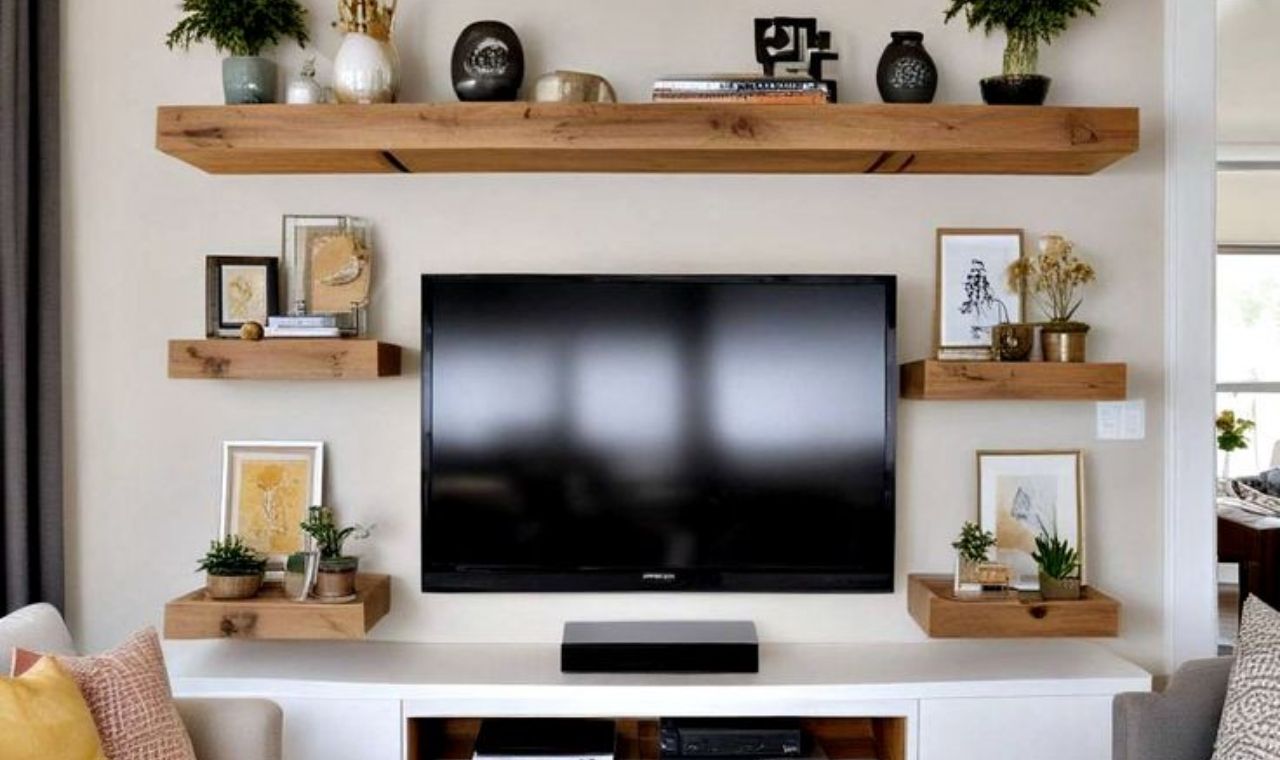
One of the easiest approaches is to use matching floating shelves on both sides of the television.
Install two or three shelves vertically on the left and right sides, keeping the spacing consistent. This creates a visual frame that makes the TV feel intentionally incorporated into the wall.
For the decor, repeat a few elements on both sides without making everything identical.
For example:
- Place a small plant on one side.
- Add a vase of similar height on the opposite side.
- Use books on both sides but stack them differently.
- Add framed artwork or a small decorative object to fill empty areas.
This works particularly well when you want a clean, organized living room.
2. Try a Staggered Shelf Arrangement
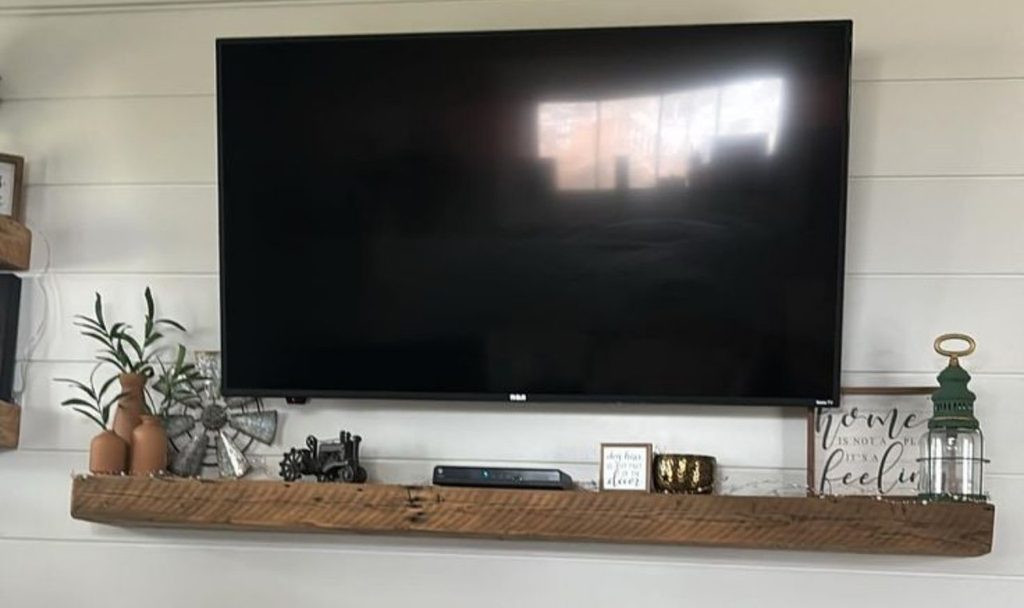
If perfectly symmetrical shelves feel too formal, stagger them.
Instead of lining up every shelf at exactly the same height, shift some shelves slightly higher or lower. You can also vary their lengths to create movement around the TV.
A staggered arrangement works especially well on a large blank wall because it breaks up the rigid rectangular shape of the television.
Keep the overall composition balanced, though. Asymmetrical does not mean randomly placing shelves wherever there is empty space.
3. Use Shelves Above and Beside the TV
Rather than limiting your shelves to the sides, create a larger composition that extends above the television.
You might use:
- Two shelves on one side
- Two shelves on the other side
- One longer shelf above the TV
This draws attention upward and helps use vertical wall space effectively. HGTV also highlights the idea of placing floating shelves above a television to pull the eye upward and make the TV less dominant.
Leave enough breathing room around the television so the shelves don’t make the screen feel boxed in.
4. Style the Shelves With Books and Small Objects
Books are one of the easiest ways to make floating shelves around a TV feel lived-in.
Instead of lining up books like a library, mix horizontal and vertical stacks.
Try this combination:
Shelf 1:
A small stack of books + decorative object
Shelf 2:
Two or three standing books + small plant
Shelf 3:
Horizontal books + vase or sculpture
The variation keeps the shelves from looking repetitive.
Choose books that complement the room’s existing colors rather than selecting them solely for their covers.
5. Add Greenery for a Softer Look
TVs, media consoles, and electronics tend to introduce plenty of hard, straight lines into a living room.
Plants can soften that effect.
Small trailing plants work particularly well on floating shelves because their leaves can extend slightly beyond the shelf edge. For a cleaner appearance, use compact plants in simple ceramic or textured pots.
If your room receives little natural light, realistic faux greenery can also work.
The goal isn’t to turn the TV wall into a jungle. One or two plants placed strategically can be enough.
6. Mix Different Heights
One of the simplest ways to improve floating shelf styling is to stop placing objects at the same height.
A shelf filled with objects that are all roughly the same size can look flat and predictable.
Instead, combine:
- Tall vase
- Medium-sized frame
- Short decorative bowl
- Small plant
- Horizontal books
- Small sculpture
The variation creates visual rhythm while keeping the display interesting.
A useful rule is to build each shelf around one taller item, one medium item, and one or two smaller pieces rather than filling every inch.
7. Coordinate the Shelves With Your TV Console
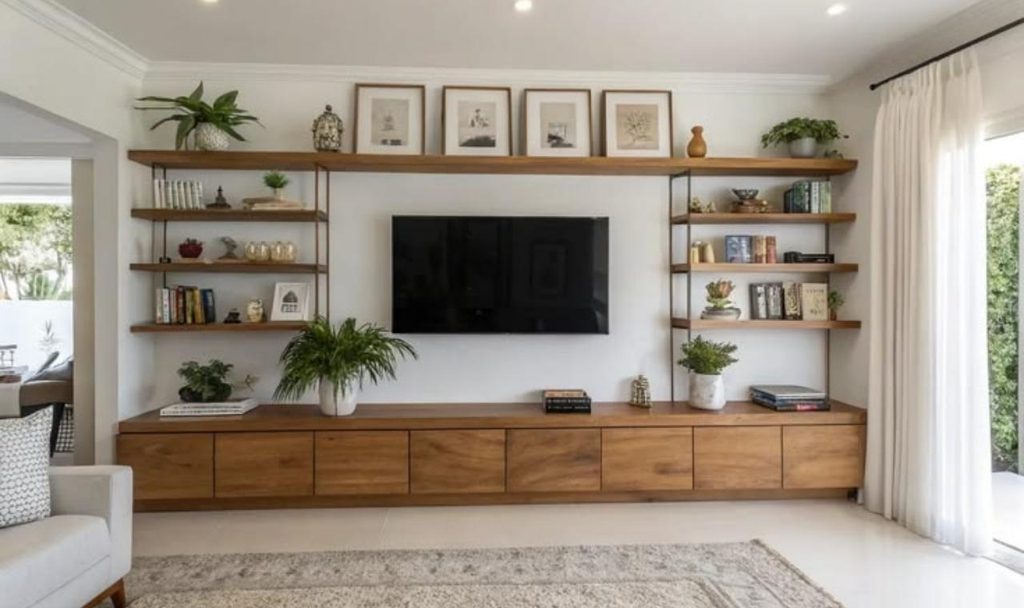
If your TV sits above a media console, use the console as part of the overall design.
The floating shelves don’t have to match the console perfectly, but they should feel related.
For example:
| TV Console | Floating Shelf Direction |
| Warm wood | Wood shelves or natural accessories |
| White | Light shelves with neutral decor |
| Black | Dark shelves with lighter accessories |
| Walnut | Brass, cream, black, and earthy accents |
| Minimalist | Fewer objects and clean lines |
This creates a visual connection between the furniture below and the shelves around the television.
8. Use One Color to Tie Everything Together
A shelf display can contain different materials without looking chaotic if the colors are connected.
Choose one or two accent colors from the room and repeat them on the shelves.
For example, if your living room already has:
- Beige sofa
- Black coffee table
- Green plants
- Warm wood furniture
You could use black frames, natural wood accessories, cream ceramics, and greenery on the shelves.
The result feels coordinated without requiring every item to match.
9. Leave Plenty of Empty Space
One of the biggest mistakes people make when decorating floating shelves is filling every available inch.
Open shelves need negative space.
Leaving some areas empty allows individual objects to stand out and prevents the TV wall from competing with the rest of the room.
Instead of asking, “What else can I put here?”, ask, “Does this shelf need anything else?”
Sometimes removing one object improves the entire arrangement.
Current interior-design guidance also emphasizes editing open shelves and avoiding excessive visual clutter.
10. Add Framed Art Instead of More Accessories
You don’t have to use only decorative objects.
Small framed artwork can add personality and help break up a collection of books, vases, and plants.
Try leaning a small frame against the wall instead of hanging it. This creates a more relaxed, layered appearance.
You can also overlap a smaller frame slightly behind another object.
Just make sure the artwork isn’t positioned where it competes with the television screen.
11. Use Natural Wood Shelves for Warmth
If your TV wall feels cold or overly modern, natural wood floating shelves can introduce warmth.
Oak, walnut, and other wood finishes can work beautifully with neutral interiors.
Pair wood shelves with:
- Woven baskets
- Ceramic vases
- Greenery
- Books
- Stone or wood accessories
- Neutral artwork
For a more organic look, shelves with a natural or live-edge appearance can add texture and individuality. Southern Living also highlights live-edge wood as a way to introduce natural character into floating-shelf designs.
12. Make the TV Wall Feel Like a Gallery
Instead of treating the shelves as simple storage, think of the entire wall as a curated display.
Combine small pieces of artwork with books, photographs, plants, and sculptural objects.
You could create a loose gallery effect where the shelves carry some of the visual interest while the TV remains the central functional element.
This approach works particularly well when you don’t want a large piece of artwork directly behind the television.
13. Add Subtle Shelf Lighting
Lighting can completely change the appearance of floating shelves in the evening.
Small LED strips or other concealed lighting can be placed beneath shelves to create a soft glow.
The light doesn’t need to be extremely bright. In fact, subtle lighting usually works better around a television because you don’t want unnecessary glare competing with the screen.
Under-shelf lighting is also a practical way to highlight decorative objects. Southern Living recommends under-shelf lighting as a way to add drama and make displayed pieces stand out.
14. Use a Minimalist Three-Shelf Setup
You don’t need six shelves to create an attractive TV wall.
Three carefully styled shelves can be enough.
For a minimalist arrangement, install three shelves on each side of the television and keep the decor restrained.
For example:
Top:
Small plant + artwork
Middle:
Books + ceramic object
Bottom:
Vase + small sculpture
Repeat the overall visual weight on the opposite side while changing individual objects.
This creates symmetry without making the display look like a showroom.
15. Build a Full Wall Composition
If your television is mounted on a particularly large wall, small shelves may look lost.
In that situation, consider a larger built-in-looking arrangement.
Longer floating shelves can extend beyond the width of the TV and connect the television area with surrounding furniture. This makes the wall feel more intentional and can visually expand the composition.
HGTV similarly highlights long floating shelves as a way to use horizontal wall space and create a broader visual effect.
How to Style Floating Shelves Around a TV Without Making Them Look Cluttered
The best shelf displays usually follow a simple formula:
Different heights + repeated colors + varied textures + empty space.
Start by choosing your largest decorative object. Then add medium-sized pieces around it and finish with smaller accents.
For example:
Large: ceramic vase
Medium: framed photo
Small: candle or decorative object
Texture: plant or woven accessory
Negative space: leave part of the shelf empty
You don’t need to use every category on every shelf. The idea is to create variation across the entire wall.
Should Floating Shelves Go Above or Beside the TV?
Both options can work, but they create different effects.
| Placement | Best For | Overall Effect |
| Beside TV | Framing the screen | Balanced and structured |
| Above TV | Drawing the eye upward | Taller-looking wall |
| Above + beside TV | Large blank walls | Complete feature wall |
| Staggered around TV | Casual interiors | Relaxed and dynamic |
| Long shelves across wall | Wide rooms | Strong horizontal effect |
If you’re unsure, start with shelves on both sides. This is usually the easiest arrangement to balance.
How Many Floating Shelves Should You Put Around a TV?
There is no universal number.
The right amount depends on the TV size, wall dimensions, shelf length, and how much visual weight already exists in the room.
A small TV on a narrow wall may only need a couple of shelves.
A large television on a wide wall may need a more substantial arrangement.
Rather than choosing a number first, measure the wall and mark your proposed shelf positions with painter’s tape. Step back and look at the entire composition from the main seating position.
This simple test can reveal whether the shelves feel too crowded, too small, or too far apart before you drill any holes.
How to Choose Decor for Floating Shelves Around a TV
A good shelf display usually contains a mixture of functional and decorative pieces.
Consider using:
- Coffee-table books
- Small framed photographs
- Ceramic vases
- Sculptures
- Small plants
- Candles
- Decorative bowls
- Travel souvenirs
- Woven baskets
- Small clocks
- Collectibles with personal meaning
The most interesting shelves usually aren’t filled exclusively with store-bought decorations.
A few personal objects can make the wall feel connected to the people who actually live there.
What Not to Put on Floating Shelves Around a TV
Some objects are better suited to other areas of the room.
Avoid overcrowding shelves with:
- Too many small decorations
- Items that completely block the TV
- Extremely bright colors that compete with the screen
- Fragile objects placed near shelf edges
- Objects that make the shelves difficult to clean
- Too many identical accessories
You also don’t want decorative items positioned where they interfere with viewing angles or create distractions while you’re watching television.
How to Make Floating Shelves Around a TV Look Expensive
A high-end appearance usually comes from editing and consistency, not from filling the shelves with expensive accessories.
Try these upgrades:
- Choose fewer, larger-looking pieces.
A handful of substantial objects often looks more intentional than dozens of tiny decorations. - Repeat materials.
Introduce the same wood tone, metal finish, or ceramic texture in several places. - Use a restrained color palette.
Two or three main colors can make a display feel more cohesive. - Mix textures.
Combine smooth ceramics, wood, glass, fabric, and greenery. - Keep some shelves partially empty.
Negative space gives the display room to breathe. - Hide visual distractions.
Keep cables and unnecessary electronics from becoming part of the display. - Match the scale to the wall.
Tiny shelves on a huge wall can look accidental, while oversized shelves can overwhelm a small room.
A Simple Styling Formula You Can Copy
If you’re starting from scratch, use this easy formula:
On each side of the TV:
Top shelf:
One plant + one small decorative object
Middle shelf:
Three to five books + small vase
Bottom shelf:
Framed photo + sculptural object
Then look at the entire wall.
If one side feels heavier, move an object rather than immediately adding another piece.
This approach gives you the structure of symmetry while allowing enough variation to keep the shelves from looking overly staged.
Conclusion
Styling floating shelves around a TV is less about filling the wall with decor and more about creating balance. Whether you prefer symmetrical shelves, a staggered arrangement, natural wood, greenery, books, or subtle lighting, the right combination can make your TV wall feel polished and intentional.